Commercial Division

Commercial Roofing
Contractor Serving
South Florida

Low-slope and flat roof systems for commercial property owners and managers — TPO, EPDM, PVC, modified bitumen, built-up roofing (BUR / hot mop) and standing-seam metal. We inspect, repair, maintain, restore and replace.

Serving Broward County, Miami-Dade County and Palm Beach County.

Licensed & InsuredCGC #1537934 · CCC #1336954
Tri-County CoverageBroward · Miami-Dade · Palm Beach
Written Roof ReportsPhotos & recommendations included
Commercial Roofing Systems

The six systems we build on South Florida commercial roofs

Every building is different. We identify the existing roof assembly first, then specify the system that fits the deck, the drainage, the occupancy and the budget — not whichever product is easiest to install.

Modified Bitumen commercial roofing

Modified Bitumen

Mod-Bit Sheet Systems

Reinforced asphalt sheets applied in multiple plies for layered waterproofing. Mod-bit holds up well where a roof takes abuse — service traffic, equipment work and mechanical penetrations.

  • Multi-layer protection and redundant waterproofing
  • Flexible modified sheets that resist cracking
  • Strong puncture resistance
  • Built for commercial low-slope applications
Best for: restaurants, medical buildings and roofs with dense mechanical penetrations.
Built-Up Roofing commercial roofing

Built-Up Roofing

BUR / Hot Asphalt / Hot Mop

The classic multi-ply assembly: alternating layers of hot asphalt and reinforcing felts built up into a thick, monolithic waterproof membrane. Decades of proven performance on flat commercial roofs.

  • Multiple reinforced layers
  • Excellent waterproofing redundancy
  • Durability under sustained exposure
  • Proven system for low-slope and flat roofs
Best for: flat roofs already built up in asphalt, and re-roofs over existing hot-mop assemblies.

TPO Roofing

Thermoplastic Polyolefin

A single-ply membrane with a highly reflective surface — a strong fit for low-slope commercial roofs carrying heavy cooling loads in the Florida sun. Seams are heat-welded into a continuous watertight sheet.

  • Reflective surface that lowers rooftop heat gain
  • Energy efficiency and UV resistance
  • Heat-welded seams for durable watertight laps
  • Durable membrane suited to low-slope roofs
Best for: warehouses, retail centers and office buildings with large flat roof areas.

EPDM Roofing

Ethylene Propylene Diene Monomer

A durable rubber membrane that stays flexible through heat cycling and building movement. EPDM is a low-maintenance option with a long track record on low-slope commercial roofs.

  • Durable rubber membrane with proven weather resistance
  • Flexibility that handles thermal movement
  • Low maintenance requirements
  • Long service life on low-slope roofs
Best for: industrial and multifamily buildings with heavy rooftop equipment and foot traffic.

PVC Roofing

Polyvinyl Chloride

A single-ply membrane with hot-air welded seams and strong resistance to grease, chemicals and ponding water. PVC is the system of choice where rooftop exhaust or kitchen emissions attack an ordinary membrane.

  • Hot-air welded seams for a continuous watertight sheet
  • Resistant to grease, oils and chemical exposure
  • Reflective surface that reduces rooftop heat gain
  • Holds up well to standing water on low-slope roofs
Best for: restaurants, food processing, labs and buildings with heavy rooftop exhaust.

Standing-Seam Metal

Concealed-Fastener Metal Panel

Interlocking metal panels with raised seams and concealed fasteners, so there are no exposed penetrations through the panel face. A long-service-life system for both architectural and structural applications.

  • Concealed fasteners — no exposed screw penetrations
  • Raised, seamed ribs that shed water fast
  • Long service life with minimal maintenance
  • Available in finishes coated for coastal exposure
Best for: commercial buildings with visible or sloped roof areas, canopies and entries.
Commercial Roofing Services

One roofing partner for the whole roof lifecycle

From a single leak to a full tear-off and replacement, your property stays with the same licensed team and the same documentation trail.

Commercial Roof Installation

New-construction and addition roofing installed to the approved system specification and Florida code requirements.

Commercial Roof Replacement

Tear-off and re-roof of failed low-slope assemblies, sequenced to keep your building operating.

Commercial Roof Repair

Targeted membrane, flashing, seam and penetration repairs that address the actual source of the water.

Commercial Roof Inspection

Documented condition assessment of the existing system, with photos and a repair-versus-replace recommendation.

Commercial Roof Maintenance

Scheduled preventive service — drains, flashings, sealants, seams — with a written record each visit.

Emergency Roof Repair

Active leaks stabilized and temporarily dried in, followed by a permanent repair plan.

Storm Damage Assessment

Post-storm documentation of wind, uplift and debris damage for your records and claim file.

Leak Detection

Tracing interior water back to its true rooftop entry point instead of patching where it shows.

Roof Restoration

Where the deck and insulation are sound, restoration options that extend service life without a full tear-off.

Inspection & Assessment

What a commercial roof inspection covers

Before anyone talks about price, we walk the roof and document what is actually there. That assessment is what a responsible recommendation is built on.

You get a written roof report

A detailed report with photos of each area of concern, findings by roof section, and clear recommendations you can share with ownership, a board or a management company.

Schedule a Commercial Roof Inspection
  • Existing roof-system identification
  • Membrane and surface condition
  • Flashing and perimeter details
  • Roof penetrations and curbs
  • Drainage, drains and scuppers
  • Ponding water and low areas
  • Signs of leaks or trapped moisture
  • Storm and wind damage
  • Potential failure points
  • Overall roof condition rating
  • Repair versus replacement recommendations
Preventive Maintenance

Small problems are cheap. Ignored ones are not.

Most commercial roof failures in South Florida start somewhere small — a clogged drain, an open lap, a dried-out sealant joint at a curb. Left alone through a rainy season, that detail turns into saturated insulation and interior damage.

A maintenance program catches those items early, keeps a documented history of the roof, and helps extend the useful life of the system you already paid for.

Ask about maintenance programs
  1. 01
    Routine inspectionsScheduled visits on a set interval, plus post-storm checks.
  2. 02
    Drain & scupper checksClearing debris so water leaves the roof the way it was designed to.
  3. 03
    Flashing inspectionWalls, curbs, edges and terminations checked for separation.
  4. 04
    Membrane inspectionSeams, laps, blisters, splits and surface wear documented.
  5. 05
    Sealant inspectionPitch pans, penetrations and joints re-sealed before they open up.
  6. 06
    Minor repairs on the spotSmall items handled during the visit rather than deferred.
  7. 07
    DocumentationPhotos and notes per visit, building a service history for the roof.
  8. 08
    Maintenance recommendationsA prioritized list of what to address now and what to budget for.

Repair vs. Replacement

A full replacement is not always the answer

Plenty of commercial roofs get replaced years before they had to be. We assess the condition of the existing assembly first and recommend the smallest solution that actually solves the problem.

Option 01

Repairs

Isolated damage on an otherwise sound roof — repaired and documented.

Option 02

Preventive maintenance

A roof with life left that needs consistent upkeep, not construction.

Option 03

Restoration

Sound deck and insulation, worn surface — restored instead of torn off.

Option 04

Partial replacement

One failed section or wing replaced while the rest stays in service.

Option 05

Complete replacement

When the assembly is at the end of its life, a new system is the honest call.

Built for South Florida

Your roof works harder here than almost anywhere

Intense sun and UV exposure, extreme heat, heavy rainfall, tropical storms, hurricane conditions and wind-driven rain all act on the same assembly — often in the same week. Ponding water on a poorly drained low-slope roof compounds every one of them.

We address that with roofing practice, not marketing: positive drainage to working drains and scuppers, correctly detailed flashings and perimeter terminations, appropriate fastening and attachment, and work performed in compliance with applicable Florida Building Code and local requirements. No system is hurricane-proof — the goal is a properly specified, properly installed, properly detailed roof.

Drainage

Slope, drains, scuppers and overflow paths verified so water leaves fast.

Flashings

Walls, curbs and penetrations detailed for wind-driven rain.

Perimeter detailing

Edge metal and terminations — where uplift pressure concentrates first.

Fastening

Attachment methods and patterns per the approved system requirements.

Code compliance

Permitting and inspections handled to applicable Florida and local building requirements — including product approvals for the specified assembly.

Properties We Serve

From a single storefront to a full management portfolio

We work with owners, boards, facility teams and property managers across Broward, Miami-Dade and Palm Beach counties.

Office BuildingsRetail CentersWarehousesIndustrial BuildingsApartment & MultifamilyCondominiumsRestaurantsMedical BuildingsSchoolsChurchesGovernment & InstitutionalHOA & Association PropertiesProperty Management Portfolios
Why Safetech Builders

A commercial roofing partner, not a one-off vendor

Licensed & Insured

Florida CGC #1537934 and CCC #1336954, fully insured.

South Florida Experience

Local crews who know how these roofs fail here — and why.

Commercial Expertise

TPO, EPDM, PVC, mod-bit, built-up and standing-seam metal.

Detailed Assessments

Findings and photos by roof area, not a one-line verdict.

Quality Materials

Systems from established manufacturers, installed to spec.

Professional Installation

Trained crews, daily site control, clean job conditions.

Clear Proposals

Scope, system, exclusions and price in writing before we start.

Project Documentation

Photos, permits and inspection records handed over at closeout.

Warranty Options

Workmanship and manufacturer coverage explained up front.

Responsive Communication

One point of contact who answers — owners, boards and managers.

Storm Experience

Post-storm assessment and documentation when it counts.

Talk to the commercial team

(954) 665-3231
Our Process

Ten steps from first call to warranty

You always know what has happened, what is next, and who is doing it.

  1. 01

    Schedule Your Consultation

    Tell us the property, the roof and the problem.

  2. 02

    Commercial Roof Inspection

    We walk and photograph the roof in full.

  3. 03

    Identify Existing System

    Assembly, layers and attachment confirmed.

  4. 04

    Assess Roof Condition

    Findings, failure points and remaining life.

  5. 05

    Prepare Detailed Proposal

    Scope and pricing in writing, options included.

  6. 06

    Select Roofing System

    TPO, EPDM, PVC, mod-bit, BUR or metal — chosen together.

  7. 07

    Planning & Permitting

    Schedule, staging, access and permits handled.

  8. 08

    Professional Installation

    Installed to spec with the building still running.

  9. 09

    Final Inspection & Documentation

    Closeout walk, photos and records delivered.

  10. 10

    Warranty & Maintenance

    Coverage documents plus an ongoing service plan.

Project Portfolio

Recent roofing work in South Florida

Roof system, property type and scope on every project — with before-and-after documentation as our commercial portfolio grows.

View full portfolio
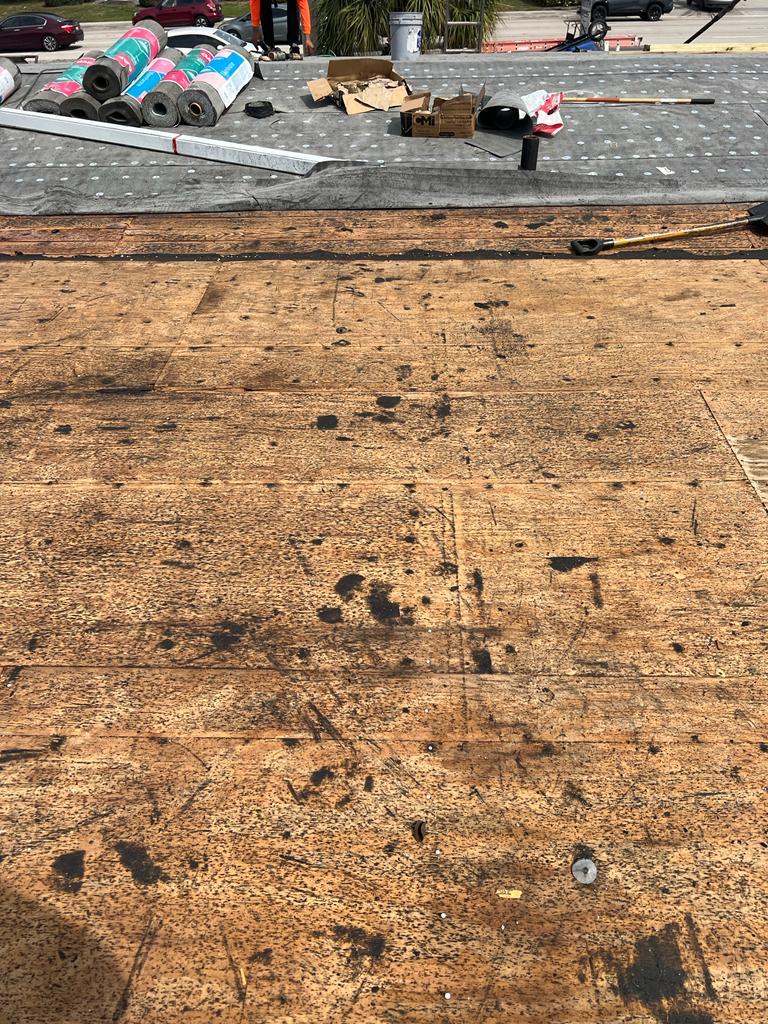
Retail Center Re-Roof
Tear-Off & Base Sheet

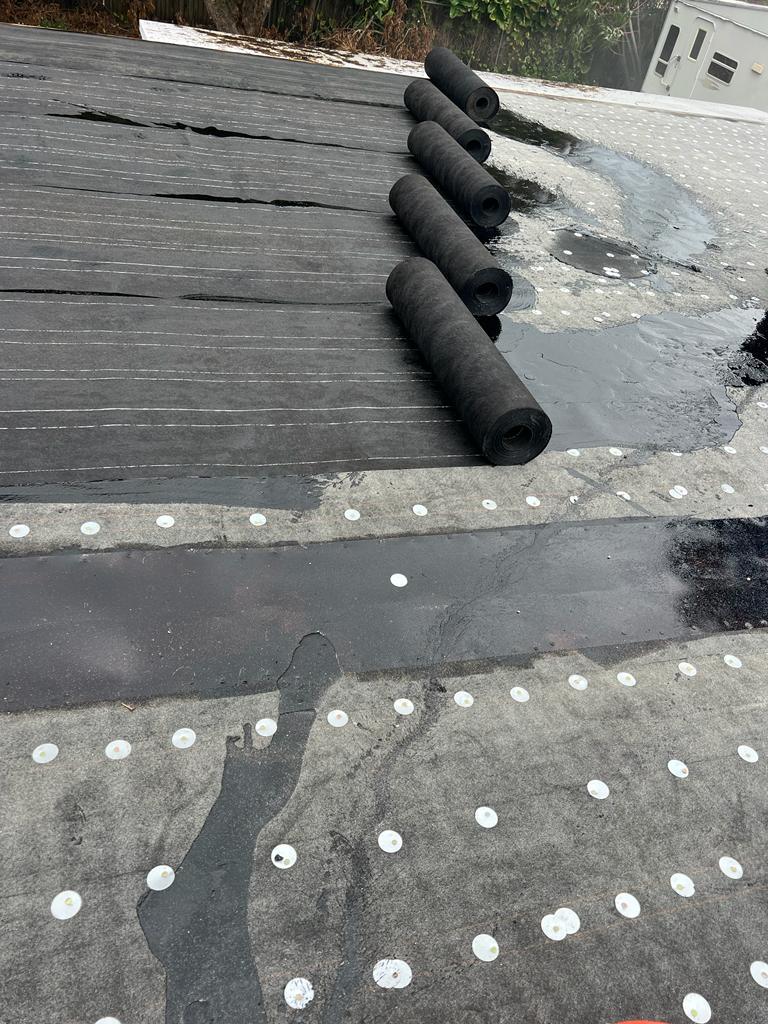
Retail Center Re-Roof

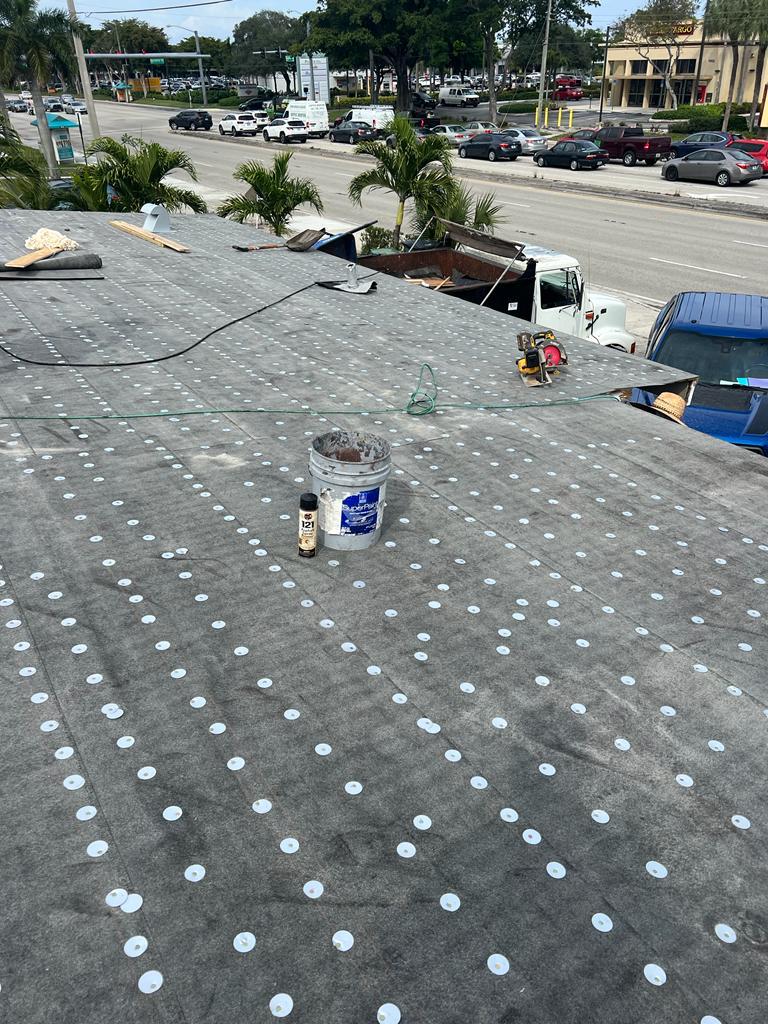
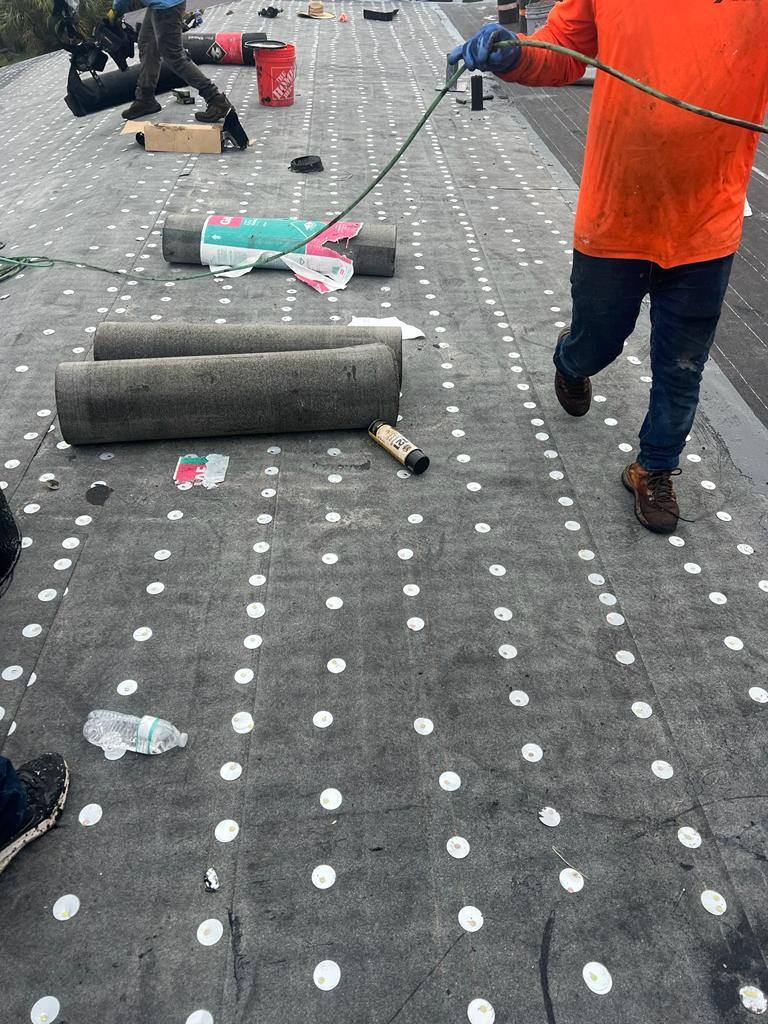
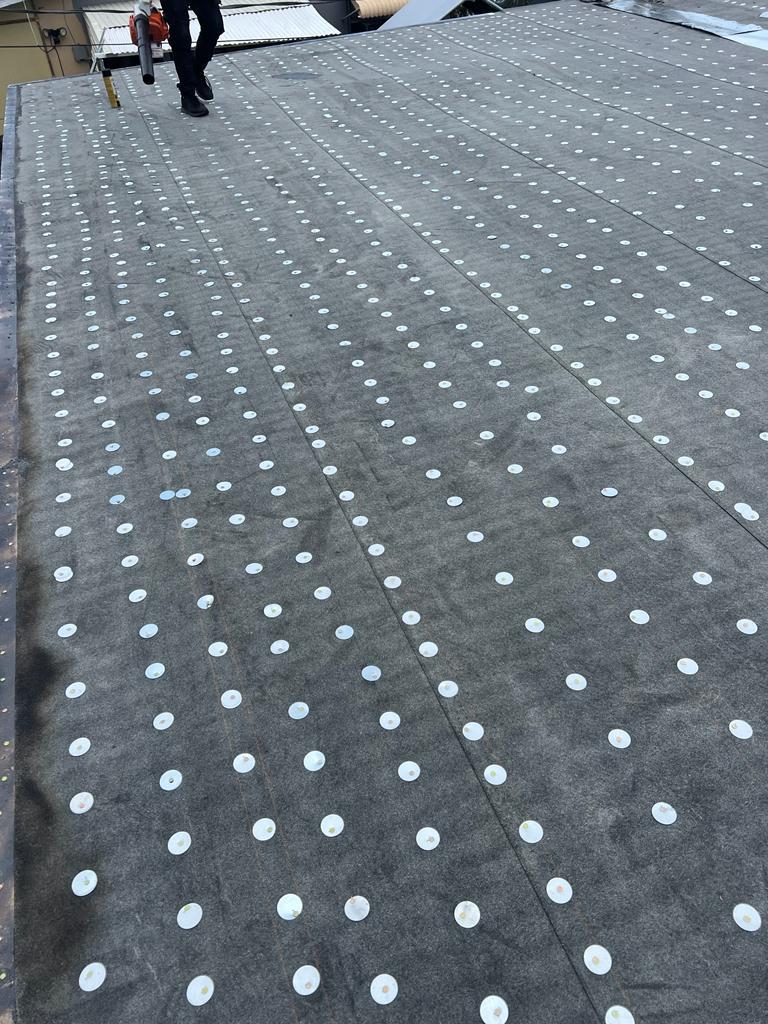
Existing system torn off to the deck, then a mechanically fastened base sheet laid out across the low-slope field.

Broward County

Wood Deck Repair & Re-Nail
Deck Repair

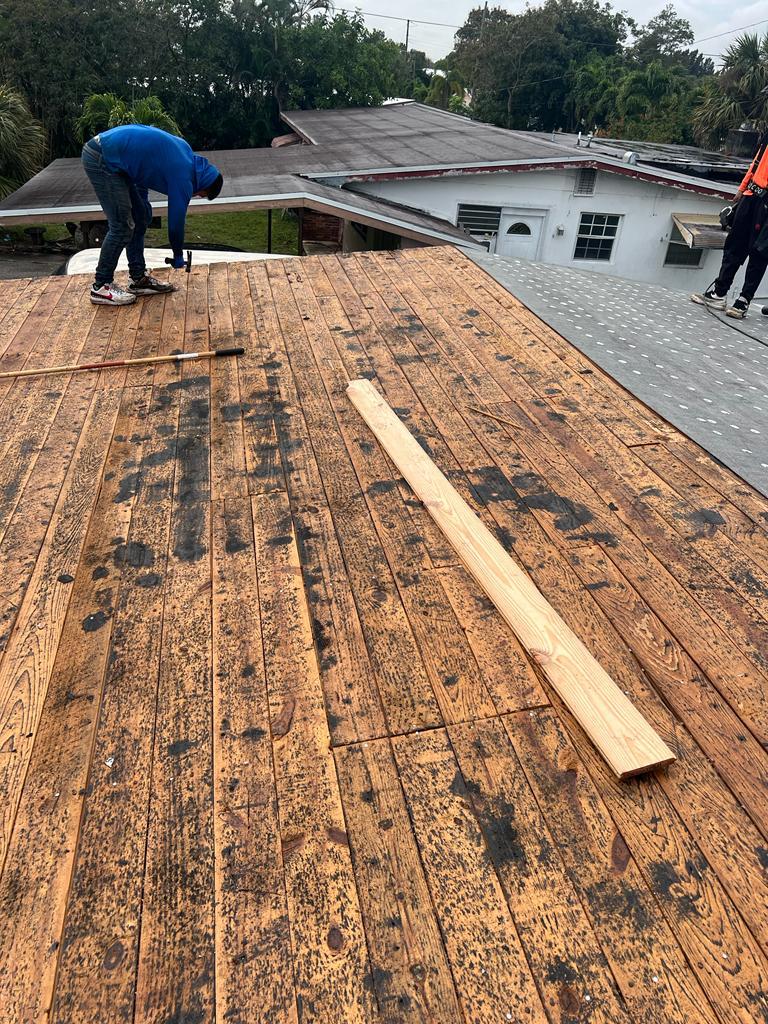
Wood Deck Repair & Re-Nail

Deck exposed and inspected board by board — damaged sheathing replaced and re-nailed before any new roofing went down.

Miami-Dade County

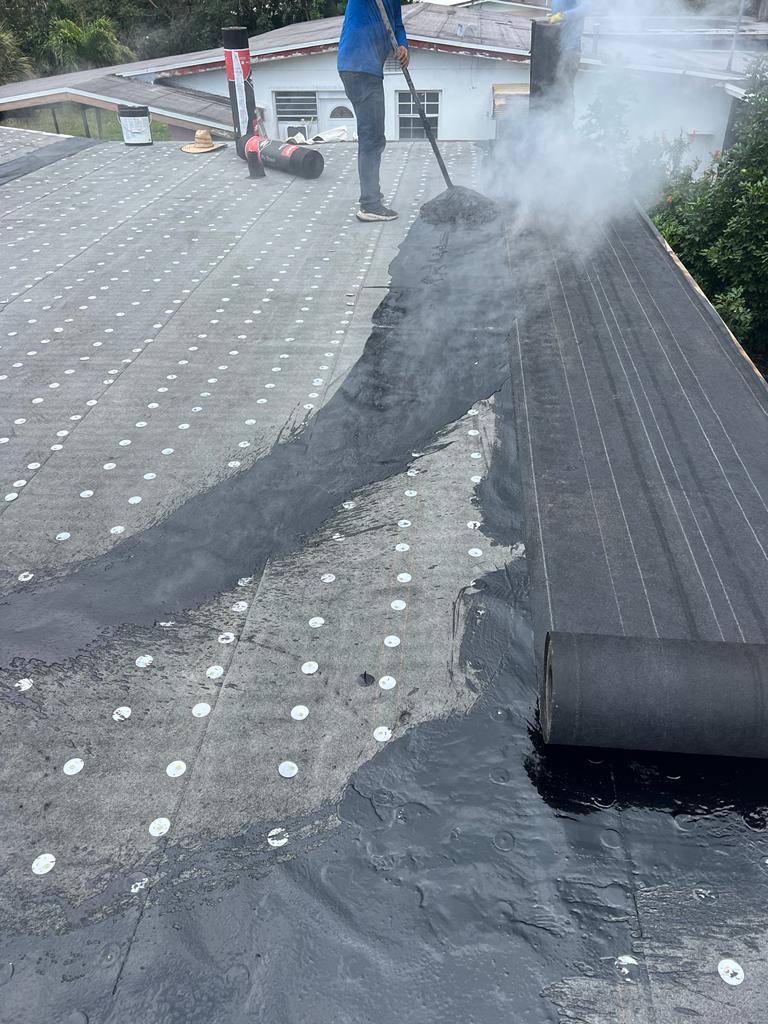
Hot-Mop Cap Sheet
Built-Up Roofing

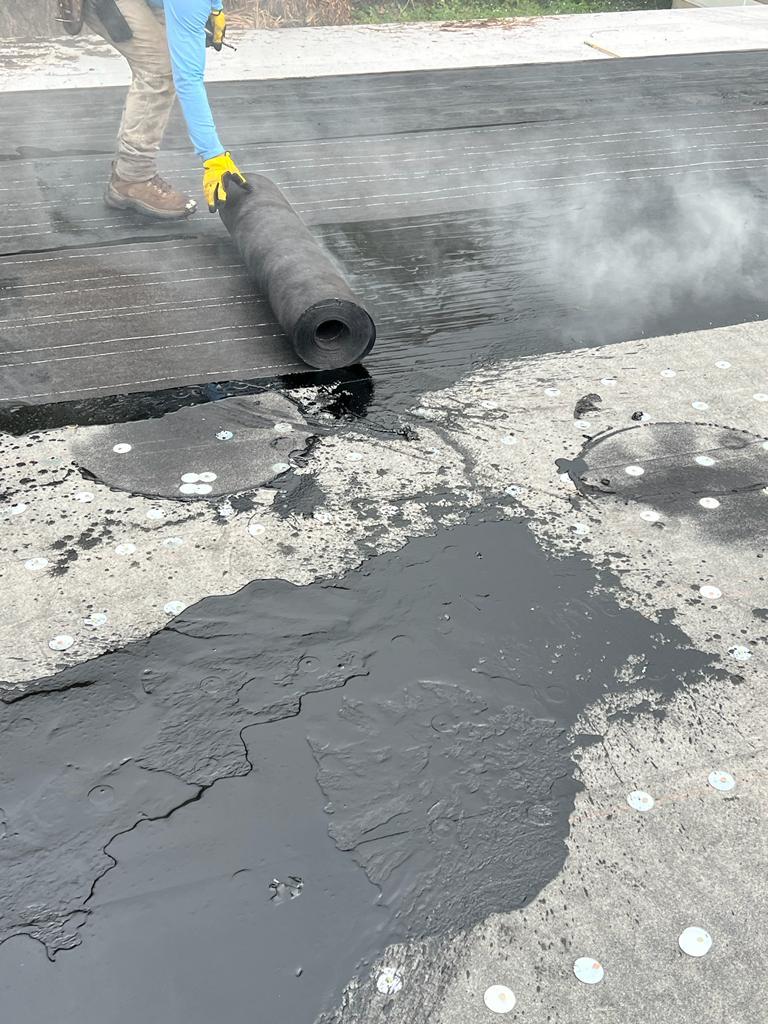
Hot-Mop Cap Sheet

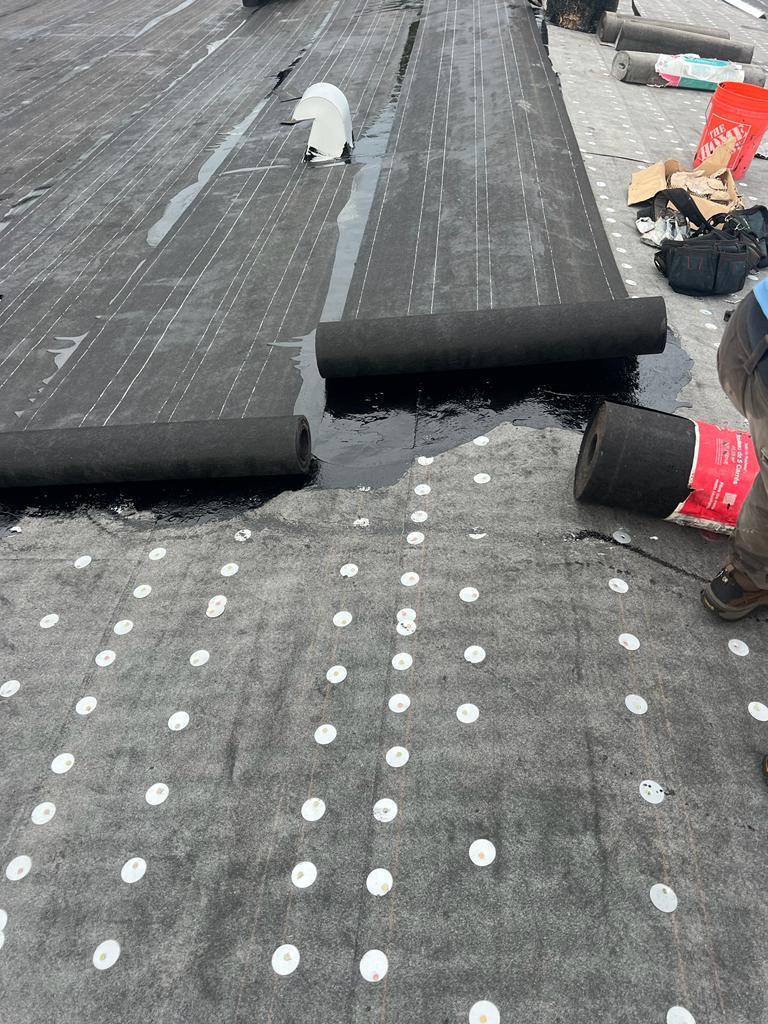
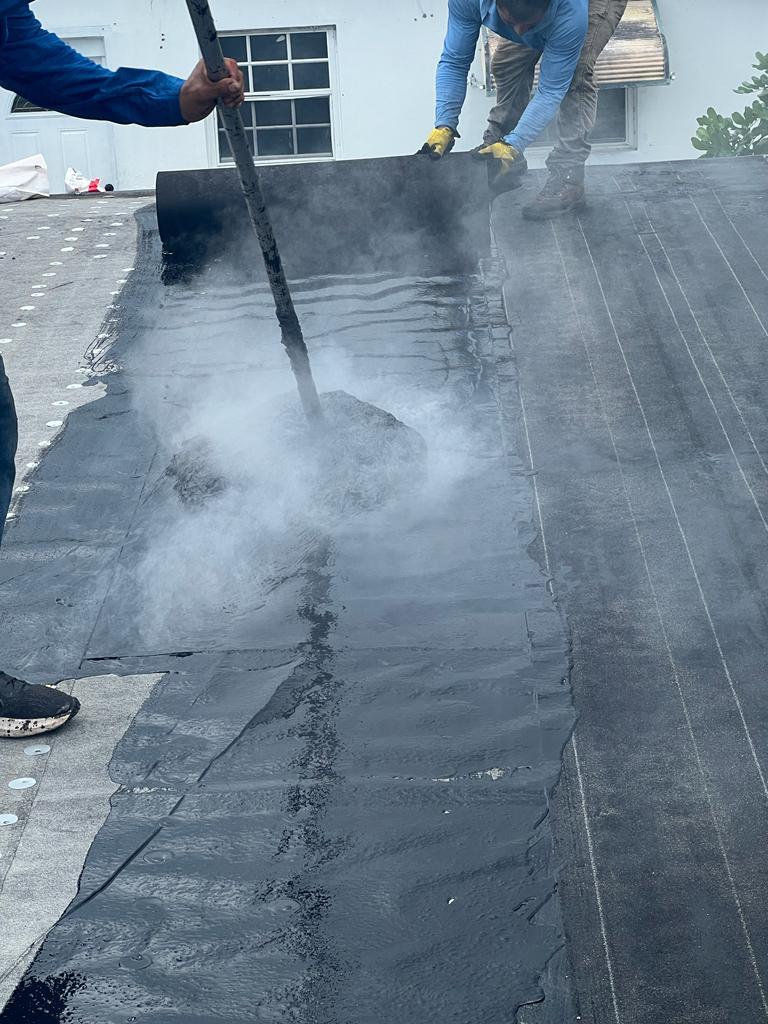
Cap sheet set into hot asphalt, mopped and rolled in continuous laps across the low-slope roof.

South Florida

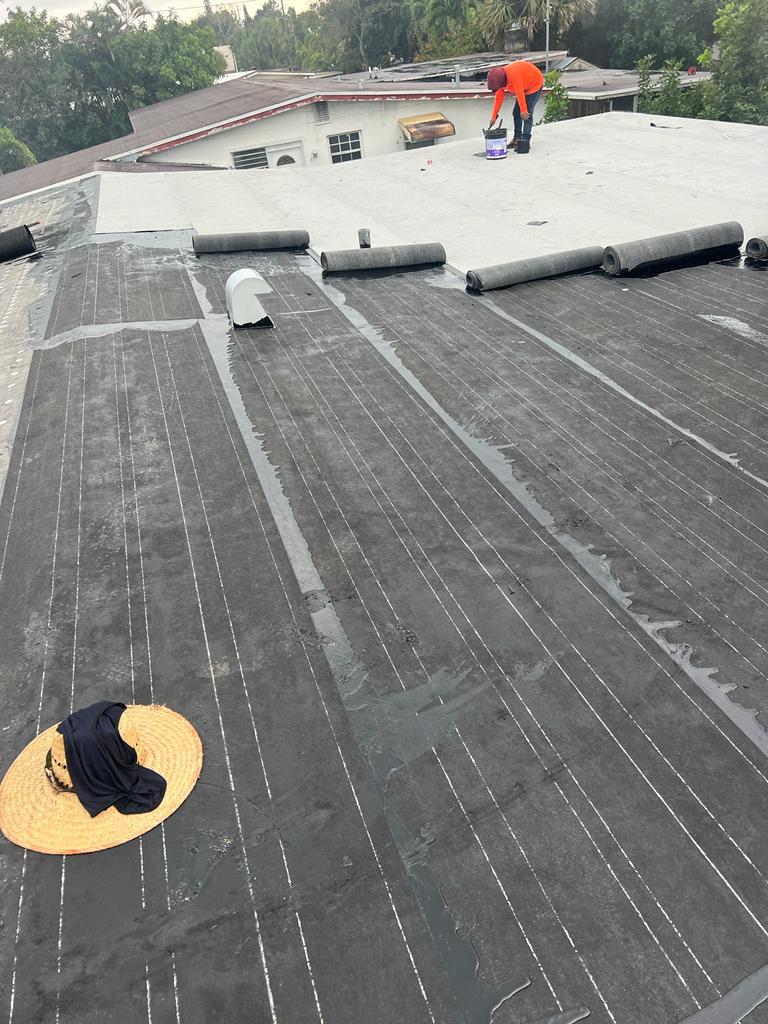
Commercial Low-Slope Field
Mod-Bit Ply

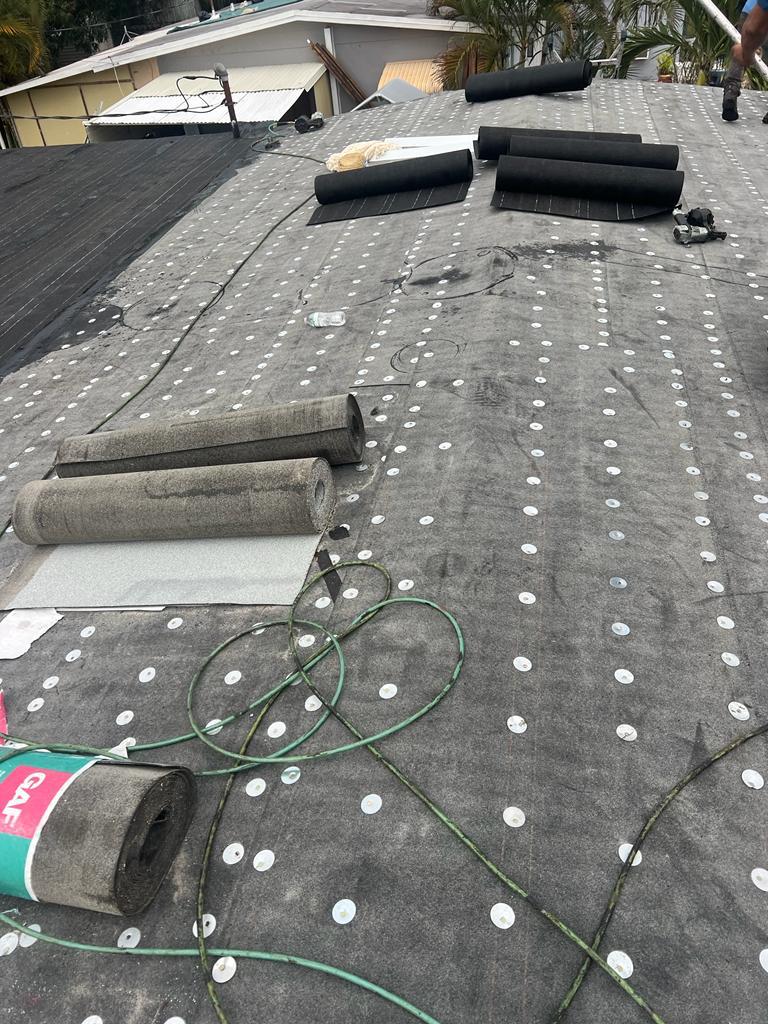
Commercial Low-Slope Field

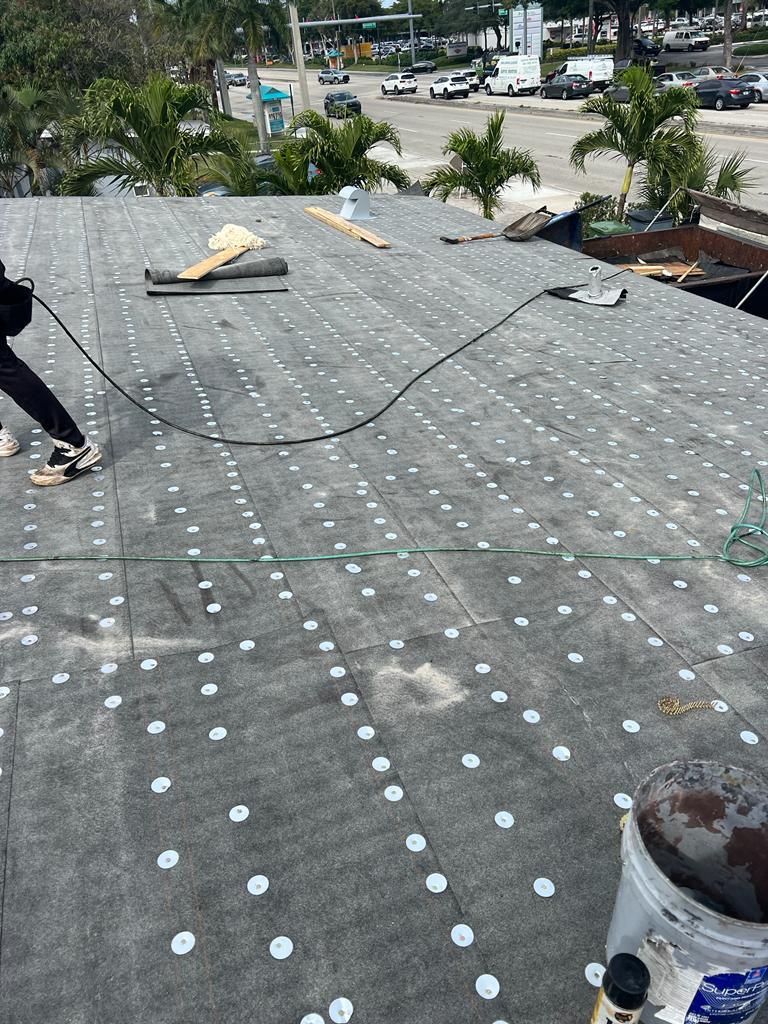
Fastener pattern set to the approved system spec, with laps sealed as each ply was installed.

Broward County

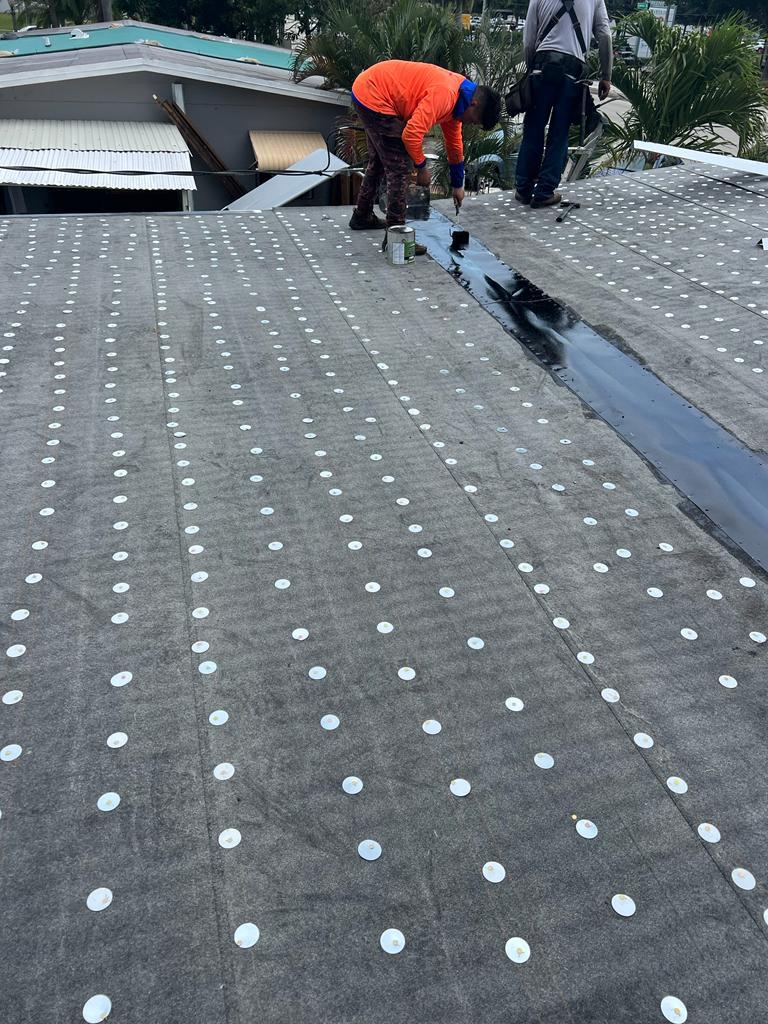
Seams, Primer & Flashings
Detail Work

Seams, Primer & Flashings

Primer and sealant worked into seams and transitions — the details that decide whether a roof leaks.

South Florida

Your building could be next

Send us the address and we will start with a documented roof inspection.

Request an estimate
Commercial Roofing Knowledge Base

Questions property owners and managers ask us

Costs, code, materials, warranties and maintenance — answered the way we would answer them on your roof. Figures are typical Florida ranges for planning; your project is priced and specified from an actual assessment.

Pricing, Costs & Economics

How much does a commercial roof cost in Florida?

Commercial roof replacement in Florida typically ranges from about $25,000 to $250,000+, driven by square footage, material selection (TPO, PVC, modified bitumen, metal), structural deck repairs and insulation requirements. On an average 10,000 sq. ft. building, owners generally see total project investments between $50,000 and $120,000. These are planning ranges only — every roof is priced from an actual site assessment.

How much does commercial roofing cost per square foot?

Replacement generally runs between $5.00 and $14.00 per square foot installed. Recover and coating projects can run lower, roughly $3.00–$6.00 per square foot, while complete tear-offs that require tapered insulation, wood deck or concrete repairs and high-wind mechanical fastening can reach the upper end of that range or above it.

How much does a TPO roof cost?

A single-ply TPO system in Florida generally costs between $5.50 and $9.50 per square foot installed. Pricing varies with membrane thickness (45-mil, 60-mil or 80-mil), attachment method (mechanically attached versus fully adhered), and the thickness of the polyiso insulation board beneath it.

How much does it cost to replace a commercial flat roof?

Usually $6.00 to $12.00 per square foot. The main drivers are whether the existing assembly must come off down to the structural deck, how much rotted decking or wet insulation has to be replaced, and municipal permitting plus any structural engineering required under local wind-load regulations.

Why are commercial roofing quotes so different?

Large price gaps almost always mean the proposals are not for the same work. Common differences: a complete tear-off with tapered insulation versus a cheaper overlay that leaves wet insulation in place; a 45-mil membrane instead of 60-mil or 80-mil; mechanical fastening versus more expensive low-noise adhered systems; and a short contractor patch warranty versus a long-term NDL manufacturer warranty.

How do I compare commercial roofing proposals?

Compare line by line: scope of work (tear-off depth versus overlay), exact materials and specs (membrane thickness, insulation density and R-value), attachment method (mechanically fastened versus fully adhered), warranty type (material-only versus full NDL manufacturer coverage), and whether permit fees and structural calculations are explicitly included.

Repair vs. Replacement & Life Expectancy

Can a commercial roof be repaired instead of replaced?

Often, yes. If leaks are localized, the insulation underneath is dry and damage covers a limited share of the roof — commonly used as a rule of thumb at under about 25% of the surface — targeted repairs or a restoration coating are cost-effective options. Where water has saturated the insulation, or the roof has already been recovered once, a complete tear-off is generally the required path.

How do I know if my commercial roof needs replacement?

The clearest indicators are widespread leaks across multiple building zones, spongy walking surfaces from saturated insulation, severe seam failure or membrane cracking and shrinkage, standing water that remains 48+ hours after rain, and an assembly that already carries two roofing layers.

How long does a commercial roof last in Florida?

Under South Florida UV, heat cycling and tropical rain, typical service lives are: TPO 15–22 years; PVC 20–30 years; modified bitumen (2- or 3-ply) 15–20 years; architectural standing-seam metal 35–50+ years; fluid-applied silicone coatings 10–15 years and renewable. Actual life depends on installation quality, drainage and maintenance.

Can you coat an old commercial roof instead of replacing it?

Yes, provided the substrate qualifies. If a moisture survey confirms the insulation is dry and the membrane is structurally sound, a high-solids silicone or polyurethane coating system can restore watertight integrity, add a renewable warranty term, and cost substantially less than a full tear-off.

Material Selection & Systems

What is the best roofing system for a commercial building in Florida?

It depends on how the building is used. Retail and offices: TPO or PVC single-ply for high solar reflectivity and heat-welded seams. Restaurants and food service: PVC, for chemical resistance against animal fats, greases and HVAC oils vented onto the roof. Industrial and heavy foot traffic: 2-ply modified bitumen or standing-seam metal for puncture resistance.

What is the best flat roof system for Florida?

TPO and PVC single-ply membranes are widely considered the premier low-slope choices here. Both use heat-welded seams that fuse the sheet into one continuous membrane, both reflect solar heat to lower cooling loads, and both perform well against high-velocity hurricane winds when correctly specified and detailed.

TPO vs. modified bitumen — which is better?

TPO wins on energy efficiency and cost: a highly reflective surface that lowers tenant utility bills, plus smooth heat-welded seams. Modified bitumen wins on puncture resistance: its multi-ply asphalt composition takes maintenance foot traffic, falling debris and dropped tools far better than a single-ply sheet.

TPO vs. PVC — what is the difference?

TPO is a polyolefin (rubber/plastic) blend; PVC is reinforced polyvinyl chloride. PVC resists oils, animal fats and chemicals, which is why it is the standard choice for restaurants and buildings with heavy exhaust hoods — TPO degrades under continuous oil exposure. PVC also contains plasticizers that keep it flexible longer, giving it a somewhat longer service life at a higher price.

What is the difference between TPO and EPDM?

Both are single-ply membranes but differ in material and seaming. TPO is a thermoplastic sheet, typically light-colored and reflective, with heat-welded seams. EPDM is a synthetic rubber membrane known for flexibility and low maintenance, with seams bonded by tape or adhesive. TPO’s reflectivity is often attractive in Florida heat; EPDM’s flexibility and simplicity suit other conditions well.

What is modified bitumen roofing?

An asphalt-based sheet system reinforced with polymer modifiers and fabric, installed in multiple plies. The layered build gives redundant waterproofing and good puncture resistance, which is why it performs well on roofs with regular service traffic and many penetrations.

What is Built-Up Roofing or hot mop?

Built-Up Roofing (BUR) — often called hot asphalt or hot mop — is built on site from alternating layers of hot asphalt and reinforcing felts, finished with a surfacing layer. The result is a thick, multi-ply waterproof membrane with a long record on flat and low-slope commercial roofs. Hot mop is a method within BUR, not a separate system.

What is the best roof for a warehouse?

Mechanically attached 60-mil TPO or PVC over a tapered polyiso insulation system. It covers large areas at low weight, reflects solar radiation to keep unconditioned space cooler, and minimizes added load on long-span steel joists.

What roofing system is best for a shopping center?

A fully adhered 60-mil TPO system, or a fluid-applied silicone/polyurethane coating on a sound existing roof. Fully adhered membranes avoid mechanical fasteners driven into tenant ceilings, which cuts noise during business hours and simplifies detailing around dense multi-tenant HVAC curbs.

Diagnostics, Leaks & Maintenance

Why is my commercial flat roof leaking?

The usual causes are penetration and flashing failures around HVAC units, pipes, vents and pitch pockets; seam separation as adhesives age or heat-welds open under thermal movement; ponding water applying constant pressure over micro-punctures; and foot-traffic punctures from dropped tools or dragged equipment.

How do you find a leak in a commercial roof?

We start with a systematic visual walkthrough of perimeter flashings, coping caps, expansion joints and equipment curbs. Where the source is not visible, infrared thermal imaging can reveal wet insulation trapped beneath a dry-looking membrane, and electronic leak detection (ELD) vector mapping can pinpoint pinhole breaches in non-conductive membranes.

Can you repair a TPO roof?

Yes. Because TPO is thermoplastic, new TPO patches can be hot-air welded directly to an existing TPO membrane years after installation. The area has to be thoroughly cleaned and prepped with the appropriate solvent before the new material is welded in.

How often should a commercial roof be inspected?

At least twice a year for Florida commercial properties — typically in spring before hurricane season and again after storm season — plus immediately following any major tropical storm or hurricane, and after significant rooftop equipment work.

How often should a commercial roof be maintained?

Bi-annually. Regular maintenance is also what keeps manufacturer warranties active, keeps internal drains clear of debris, and catches minor flashing splits before they become interior ceiling leaks.

What does commercial roof maintenance include?

Clearing debris from drains, scuppers and gutters; inspecting and re-sealing pitch pockets, pipe boots and termination bars; examining heat-welded seams and perimeter coping caps for wind stress; repairing minor membrane punctures; and documenting roof condition each visit for warranty compliance.

How much does commercial roof maintenance cost?

Routine maintenance plans in Florida typically run $500 to $2,000 per visit, or roughly $0.05 to $0.15 per square foot annually, depending on building height, square footage and rooftop equipment complexity.

Operations, Disruption & Logistics

How long does a commercial roof replacement take?

A typical 10,000–20,000 sq. ft. replacement takes 1 to 3 weeks, depending on weather, structural deck repairs and material lead times. Larger industrial complexes of 50,000+ sq. ft. can run 4 to 8 weeks.

Can my business stay open during a roof replacement?

Yes. We structure commercial tear-offs so you stay open — coordinating staging areas, material hoist deliveries and safety perimeters away from your main customer entries, and scheduling around your operating hours.

Will commercial roof replacement disrupt my tenants?

Some construction noise is unavoidable when old layers come off and deck fasteners go in. We manage it with phased installation over one section at a time, off-hour staging so the noisiest fastener work happens before retail opening, and fully adhered systems that use low-VOC adhesives instead of mechanical fasteners to cut indoor noise.

Warranties, Thickness & Specs

What is an NDL roof warranty?

An NDL (No Dollar Limit) warranty is a premium manufacturer-backed warranty that covers 100% of the labor and material cost to repair leaks caused by covered manufacturing or installation defects. Unlike a pro-rated warranty, it carries no financial ceiling — the specific terms, exclusions and inspection requirements are defined by the manufacturer for your assembly.

What does a commercial roofing warranty cover?

Two categories. A manufacturer warranty (commonly 15–30 years) covers membrane defects and premature degradation, and under NDL terms covers installation workmanship verified by a manufacturer inspector. A contractor workmanship warranty (commonly 2–10 years) covers installation defects, flashings and workmanship performed by the installing contractor.

How long is a TPO roof warranty?

Standard commercial TPO warranty terms range from 15 to 30 years and track membrane thickness: 45-mil typically qualifies for around 15 years, 60-mil for roughly 20–25 years NDL, and 80-mil for up to 30 years NDL. Exact terms are set by the manufacturer and the approved assembly.

Is a 60-mil TPO roof better than 45-mil TPO?

Yes, meaningfully. A 60-mil membrane is about 33% thicker, giving greater resistance to punctures, hail and foot traffic, and a thicker weathering layer above the reinforcing scrim for better long-term UV performance. It also qualifies for longer NDL warranty terms, where 45-mil often caps out.

Florida Code, Permits & Hurricane Resistance

Does commercial roofing require permits in Florida?

Yes. Commercial roofing requires a municipal building permit in every Florida jurisdiction. Projects typically involve wind uplift calculations, approved product documentation, structural review where applicable, and multi-stage municipal inspections through dry-in and final sign-off.

What roofing systems are approved for Miami-Dade?

Only products and complete assemblies holding an active Miami-Dade Notice of Acceptance (NOA) or a Florida Product Approval valid for the High Velocity Hurricane Zone (HVHZ) may be installed in Miami-Dade and Broward counties.

What is a Miami-Dade NOA for roofing?

A Notice of Acceptance certifies that a specific roofing assembly — membrane, insulation, fasteners and deck attachment as a system — has passed rigorous testing for wind uplift, impact and driving rain under HVHZ criteria. It is among the most demanding building-product approvals in the country.

What commercial roof is best for hurricanes?

Strong performers include fully adhered single-ply (TPO or PVC) and 2-ply modified bitumen over concrete decks, and standing-seam metal with structural double-lock seams tested for high wind zones. Tapered insulation helps by eliminating water accumulation and improving perimeter performance. No roof is hurricane-proof — the goal is a properly approved assembly, installed and detailed to spec.

How much wind can a commercial roof withstand?

A commercial roof is engineered to the wind uplift pressures required for your building’s height, exposure category and wind zone under the current Florida Building Code — in South Florida that commonly corresponds to design wind speeds in the 140–180+ MPH range. The governing number comes from the calculation for your specific building, not from the material alone.

Insulation, Overlays & Drainage

Does a commercial roof need insulation?

Yes. Florida code requires continuous rigid thermal insulation on commercial roof assemblies over conditioned space, both to prevent thermal bridging and to meet energy compliance for the permit.

What R-value do I need for a commercial roof in Florida?

Commercial roof replacements over conditioned space in South Florida generally require continuous above-deck insulation in the range of R-25 to R-30, typically achieved with two staggered layers of polyisocyanurate board. We confirm the exact required value against the current Florida Energy Conservation Code edition as part of permitting.

Can I install a new roof over my existing commercial roof?

Sometimes. Florida code permits a maximum of two roofing layers, so a recover is only possible if there is a single existing layer, a moisture survey proves the existing insulation is dry, and the structural deck can carry the added dead load. Some jurisdictions — particularly in the HVHZ — will still require a full tear-off, so we confirm with the building department before proposing a recover.

Can you install TPO over an existing roof?

Yes. TPO can be installed as a recover over existing modified bitumen, BUR or single-ply roofs. A slip-sheet or cover board must go between the old roof and the new membrane to prevent chemical incompatibility and puncture transfer.

What causes ponding water on a flat roof?

Sagging or deflected structural decks, inadequate or clogged drains, scuppers and gutters, and the absence of slope or a tapered insulation system to move runoff toward the drainage outlets.

Is ponding water normal on a commercial roof?

No. Flat roofs are low-slope, not no-drainage. Continuous standing water breaks down adhesives, accelerates membrane degradation, adds structural dead load, and voids most manufacturer warranties.

How do you fix drainage on a flat commercial roof?

By installing a tapered polyiso insulation system to build slope toward the drains, adding secondary overflow scuppers or enlarging drain sumps, and setting custom crickets behind HVAC curbs and blind walls to divert water around obstructions.

Choosing a Contractor

What should I ask a commercial roofing contractor?

Ask whether they hold a Florida Certified Roofing Contractor (CCC) license; whether they are certified by the system manufacturer to issue NDL warranties; what their jobsite safety record and Experience Modification Rate look like; and whether they handle permits, municipal inspections and structural engineering themselves.

How do I choose a commercial roofing contractor in Florida?

Look for active Florida licensing with General Liability and Workers’ Compensation coverage, demonstrated experience with your local building department and HVHZ requirements, verifiable manufacturer certification credentials, and strong local references. Safetech Builders holds CGC #1537934 and CCC #1336954.

Should my commercial roofer be manufacturer certified?

Yes. Only manufacturer-certified contractors are authorized to install assemblies that qualify for No Dollar Limit extended warranties. An uncertified installation typically limits you to basic material-only coverage.

Commercial Roofing · South Florida

Protect Your Commercial Property

Let us evaluate the existing roofing system and recommend the appropriate solution — whether your property needs an inspection, a repair, a maintenance program, restoration or a full replacement. You will get findings, photos and a clear proposal you can act on.

Licensed & Insured · CGC #1537934 · CCC #1336954 Broward · Miami-Dade · Palm Beach Call (954) 665-3231
Licensed & Insured · CGC #1537934 · CCC #1336954 10-Year Workmanship Warranty 1,000+ Projects Completed 5.0 Google Reviews