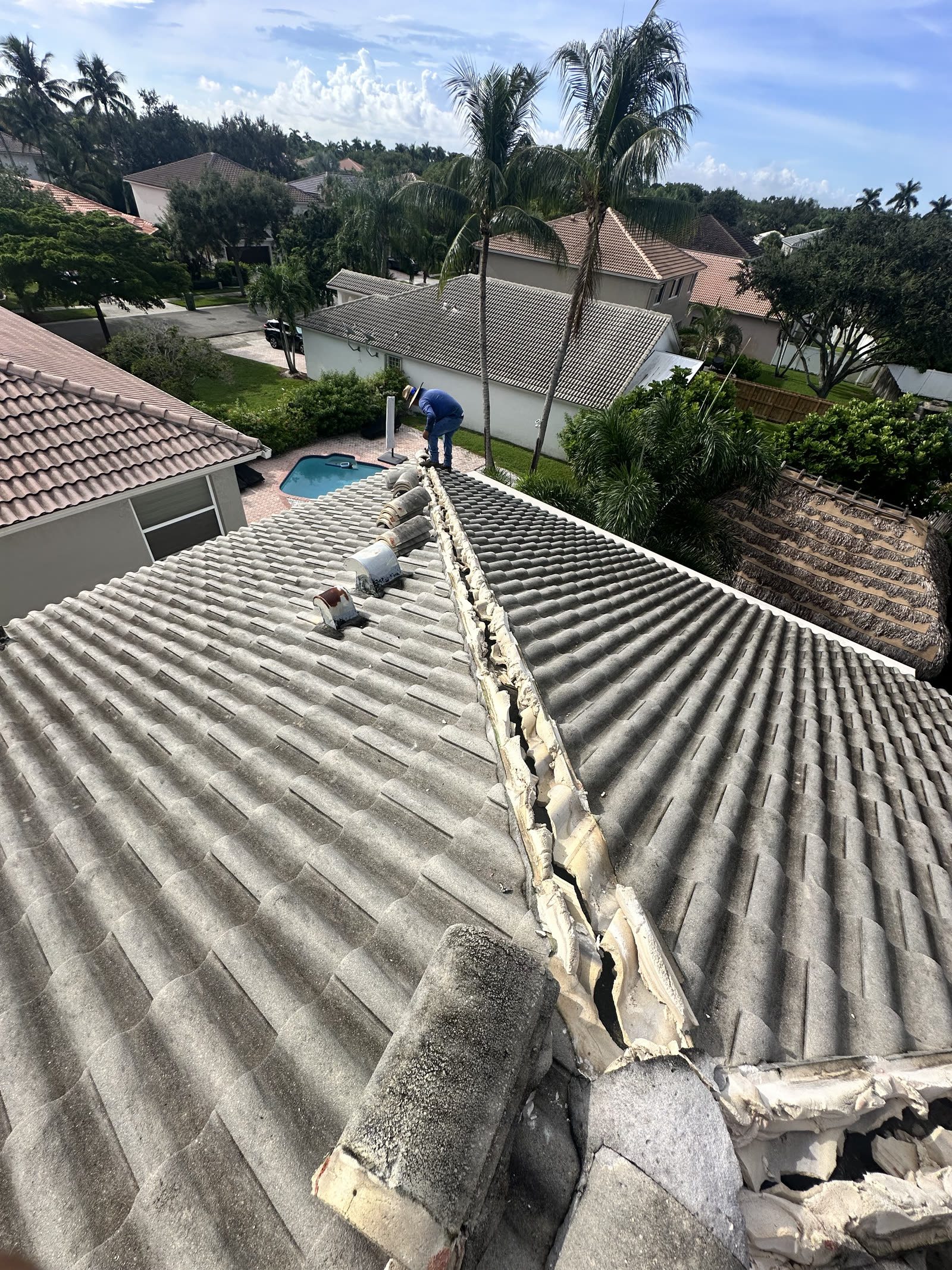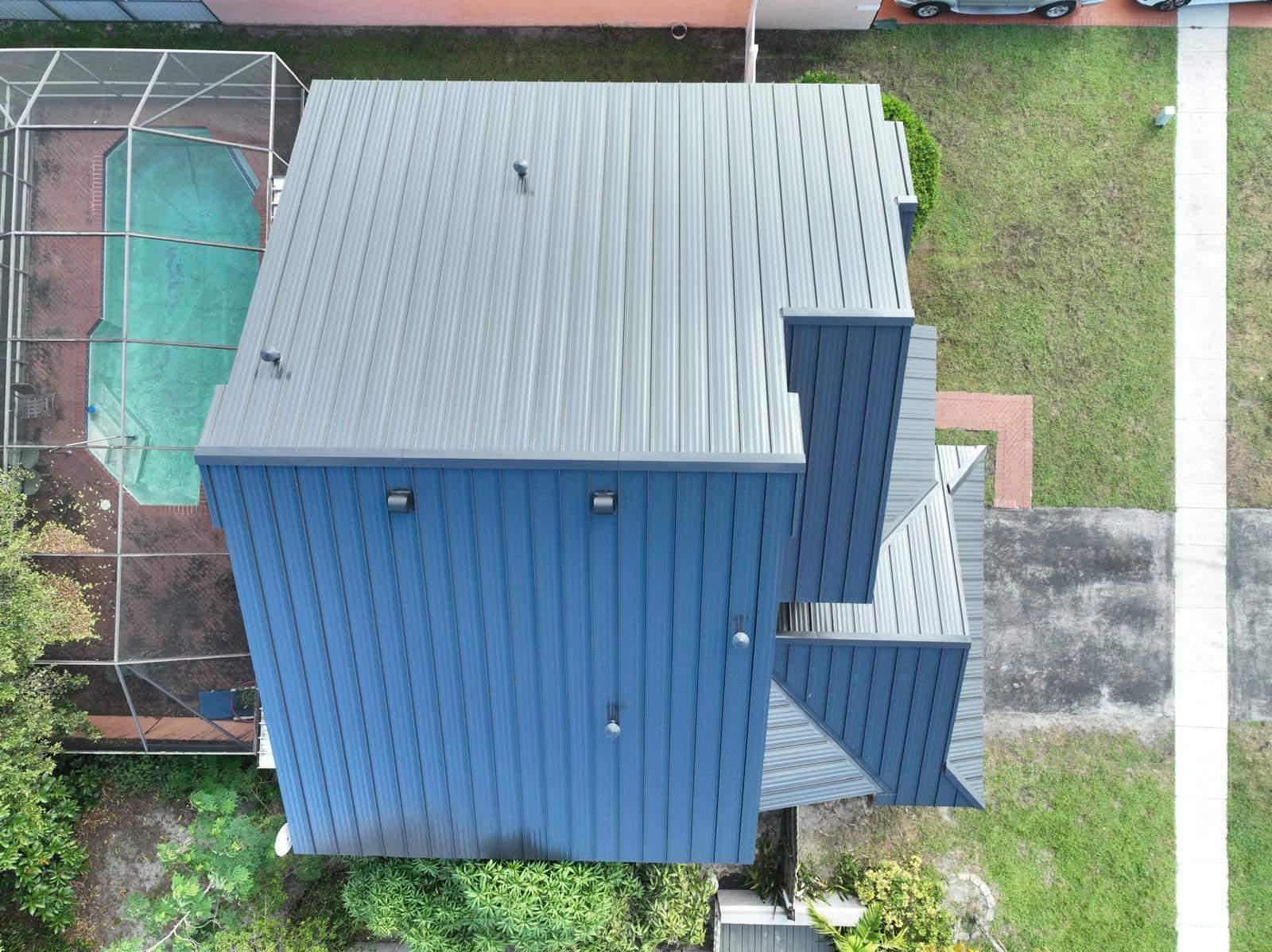

Short version: a ceiling stain is a symptom, not a diagnosis. Water enters the roof at one point, runs along a rafter or truss until it finds the lowest spot in the drywall, and only then drips. The leak itself can be Several feet uphill of the stain, which is why we start on the roof, not under the stain.
Why water travels before it drips
In a typical South Florida attic, water that gets past the underlayment lands on a truss or rafter and runs with gravity until it meets a nail head, a seam, or the first soft spot in the drywall below. By the time it drips into your room, it has already wet several square feet of framing and insulation above the stain. That hidden wet area is the real problem, the drywall stain is the last thing to happen, not the first.
What a proper leak diagnosis looks like
- From the roof, first. We walk (or fly a drone over) every penetration, valley, hip, wall flashing and ridge uphill of the stain, because that's where the water enters. If the entry point is obvious from the roof, we photograph it and show you.
- Into the attic. We trace the water path along the framing from the entry point down to where it eventually lands. The wet insulation and discolored decking are the map.
- Then the ceiling, last. The visible stain tells us where water finally gave up and dropped, useful as the end of the trail, not the beginning.
The common suspects, in order
- Pipe boots and goose necks. The rubber or lead flashing around plumbing vents fails at the top of the collar first. Easily the most common leak we find in South Florida.
- Valleys and wall flashings. Where two roof planes or a roof-to-wall meet. The underlayment detailing here is what the che
- Failed underlayment. On tile roofs it's almost always the underlayment, not the tile. The tile looks perfect, the roof still leaks.
- Cracked or slipped tiles / lifted shingles. after storms, especially around the edges.
- Ridge and hip detailing. Where water comes in during driving rain. The failure is in how the ridge mortar or cap was finished.
What you can do before you call
If it's dripping right now and you can't get a roofer there same-day, put a bucket under it, pull back any wet insulation above the stain, and photograph the ceiling and attic. Keep the photographs, they're useful for the roof repair. If this started during a storm, our emergency repair page is here →
Full disclosure. This is general information on diagnosing residential roof leaks in South Florida, not advice on your specific roof. For a diagnosis of your actual leak, book a free inspection and we'll put it in writing.
Have a stain and don't know what's above it?
We'll find where the water is actually coming in, photograph it, and give you a written estimate before we touch anything.