
This started as one damp patch near a window.
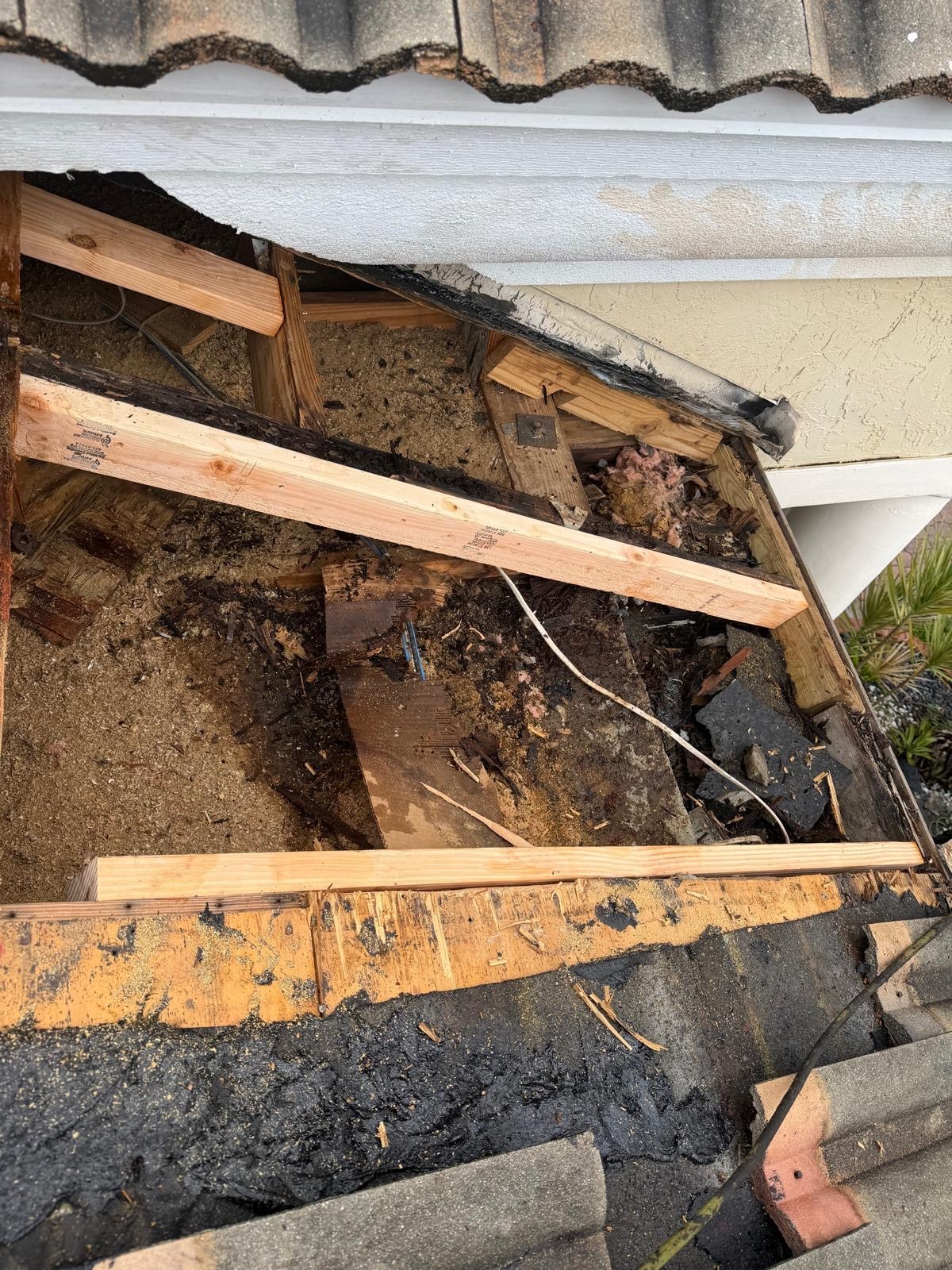
Here is a tile roof repair on a Broward County home, start to finish, in our own photographs. We're showing you this because it answers the question every homeowner asks — why can't you just tell me the price over the phone? Look at the fourth photo and you'll see why.
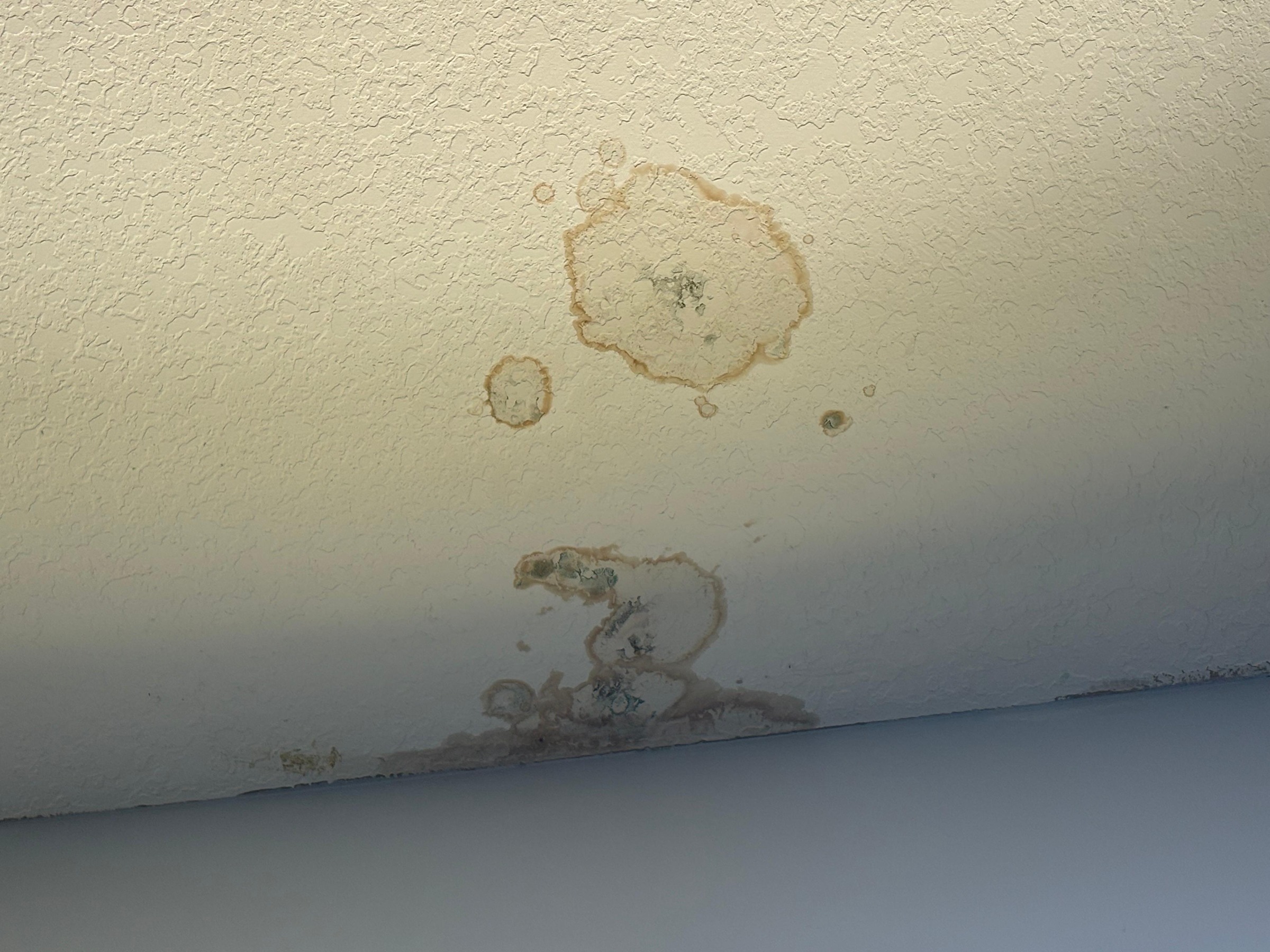
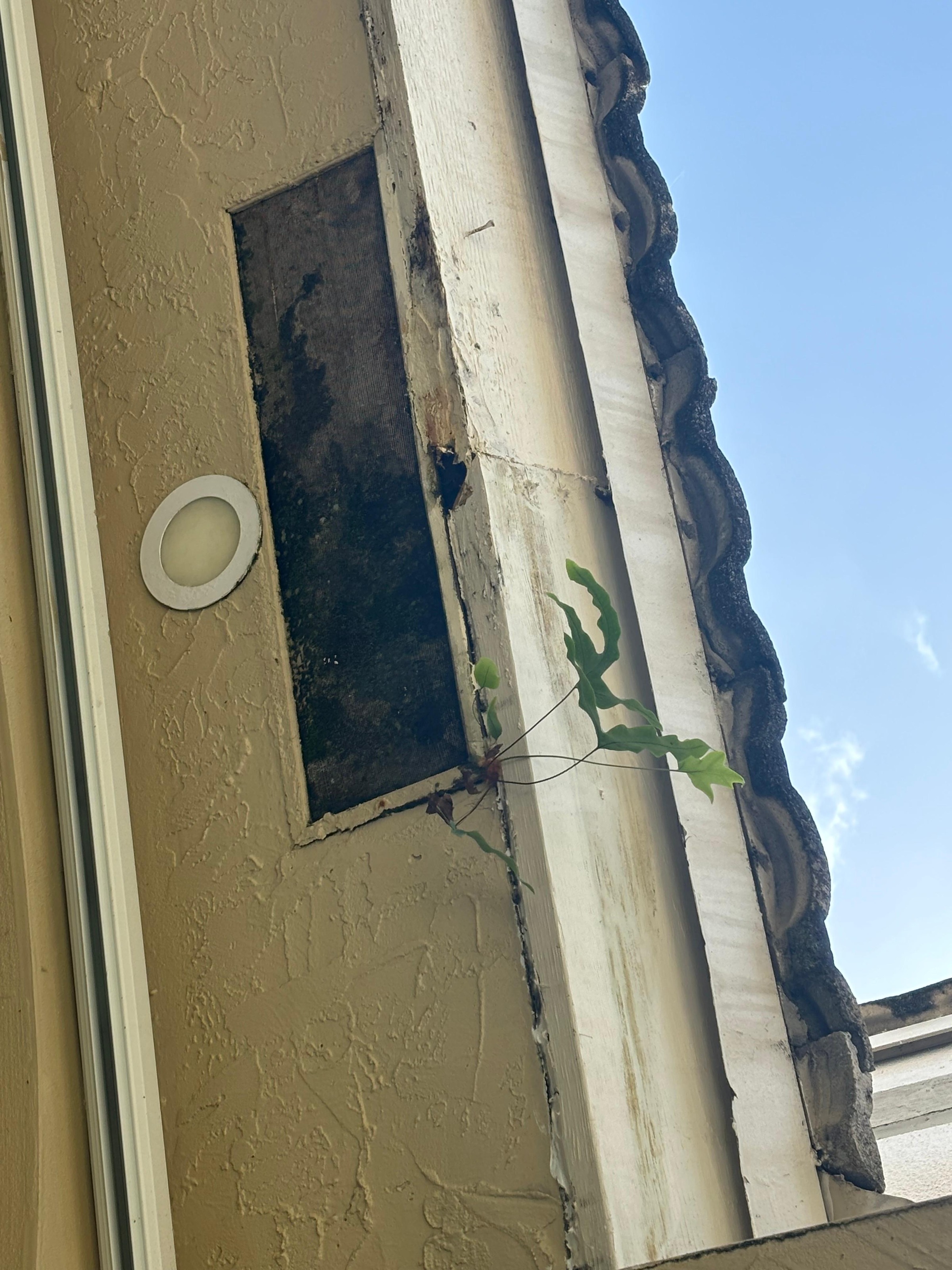
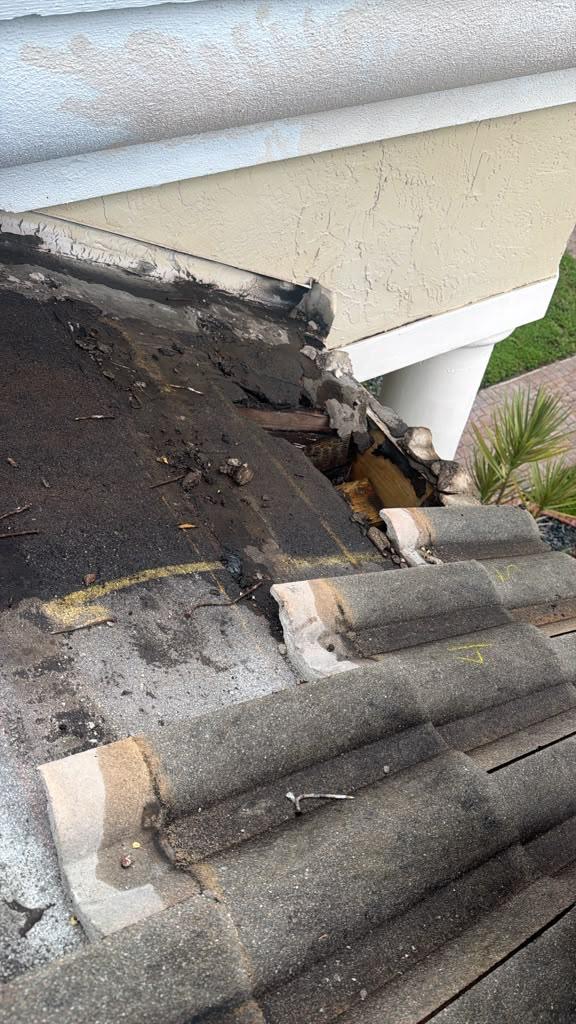
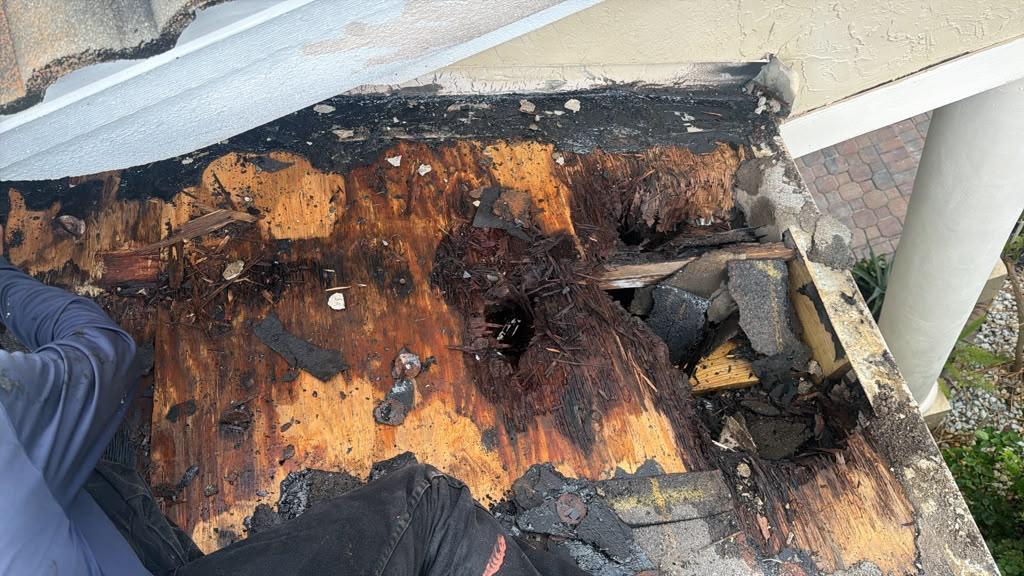
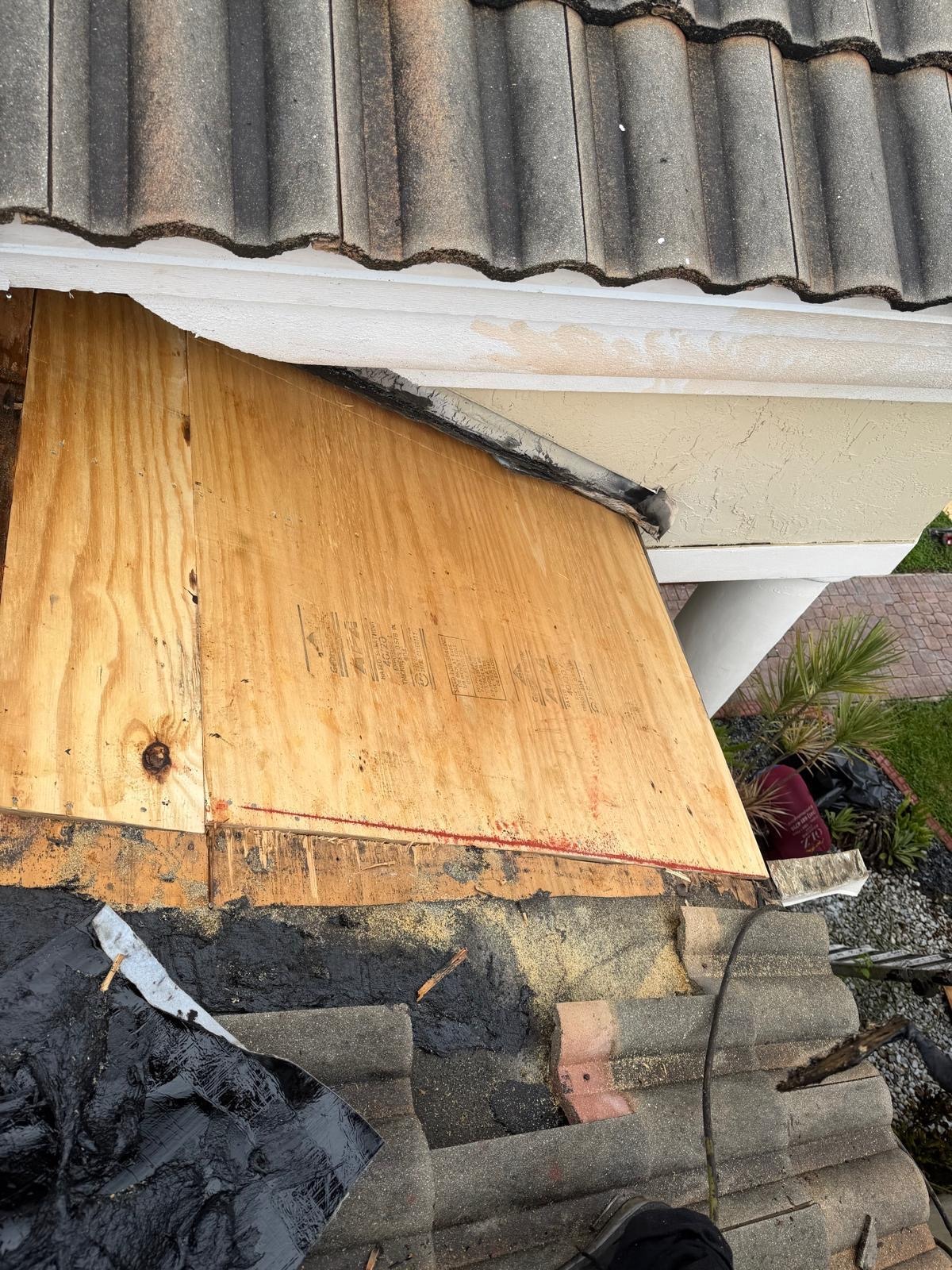
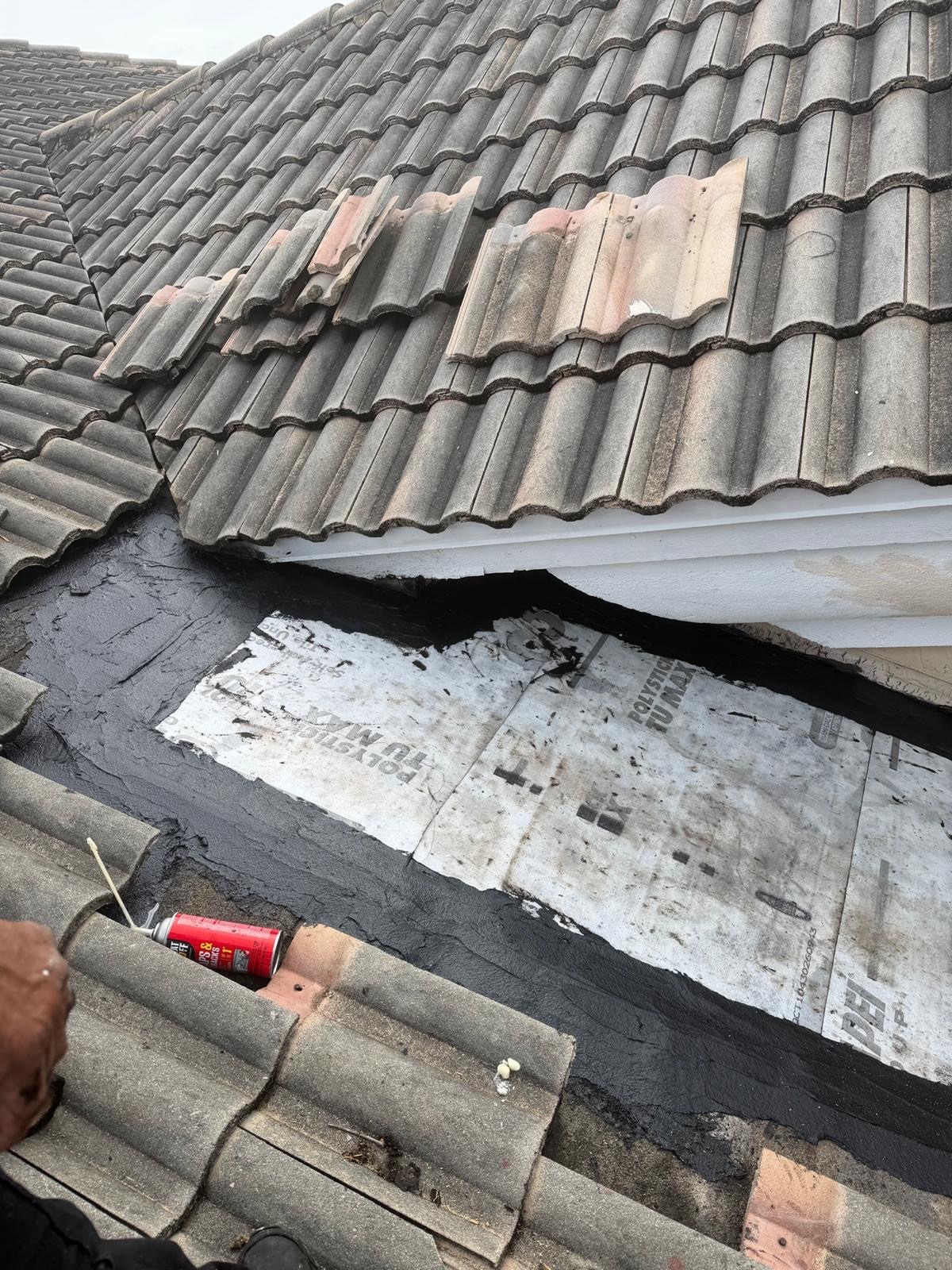
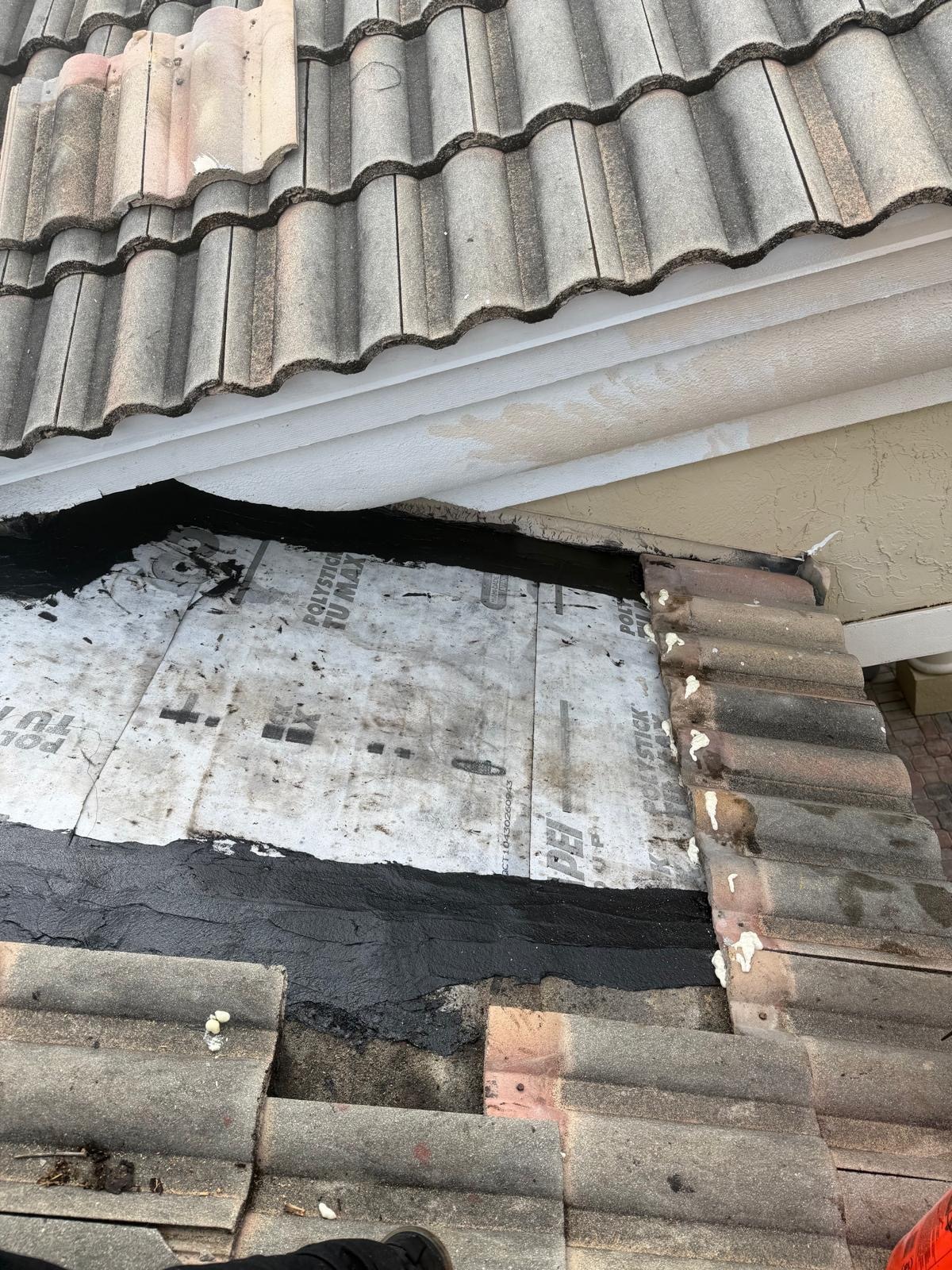
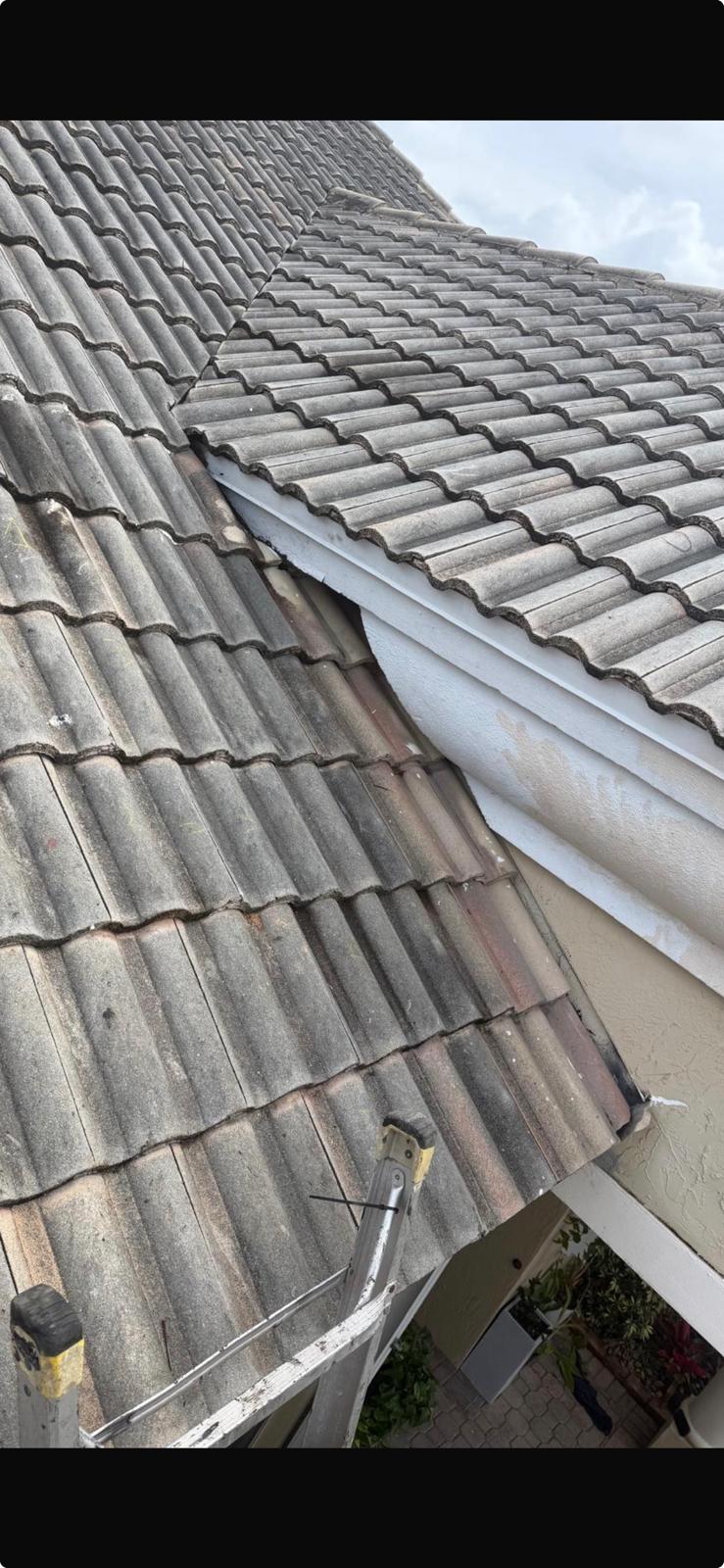
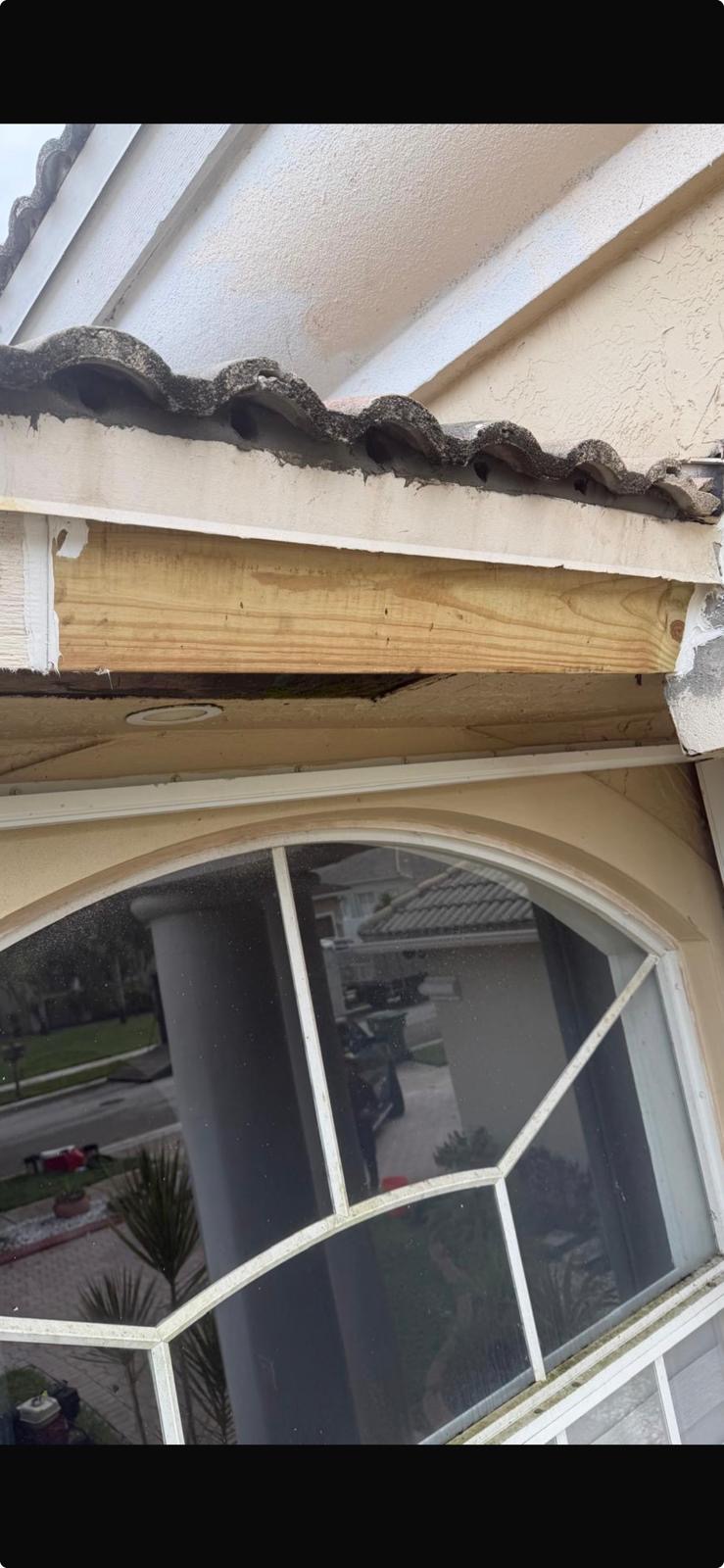
The honest lesson from this job: the homeowner called about a stain on the ceiling near a window and a rotted fascia board outside. What they actually had was rotted decking and compromised framing under tiles that looked fine. Nobody could have quoted that accurately from the driveway — and any contractor who gives you a firm price for a leak repair without lifting a tile is guessing, or planning to change the number later.
Four kinds of roof repair
Tile and shingle, plus the structural and detail work most leaks actually come down to.
Tile roof repair
- ·Cracked & slipped tiles
- ·Failed underlayment
- ·Valley & eave details
- ·Vent and goose-neck leaks
- ·Original tiles re-set where salvageable
Shingle roof repair
- ·Missing & lifted shingles
- ·Exposed nails
- ·Storm & wind damage
- ·Torn underlayment beneath
- ·TAS-107, 6-nail pattern
Decking & framing
- ·Rotted plywood decking
- ·Structural members & framing
- ·CDX to code
- ·Covered by our GC licence
Flashing & fascia
- ·Chimneys & skylights
- ·Wall & step flashing
- ·Goose necks & pipe vents
- ·Eaves, fascia & drip edge
What a repair actually involves.
Tile and shingle roofs fail in different ways and get repaired in different ways. Here's what we're doing up there — photographed on real jobs — so you know what you're paying for.
Concrete and clay tile
Underlayment patching
The tile is not what keeps water out of your house — the underlayment beneath it is. Most tile roof leaks in South Florida are underlayment failures, not tile failures, which is why a roof can look perfect from the street and still be leaking.
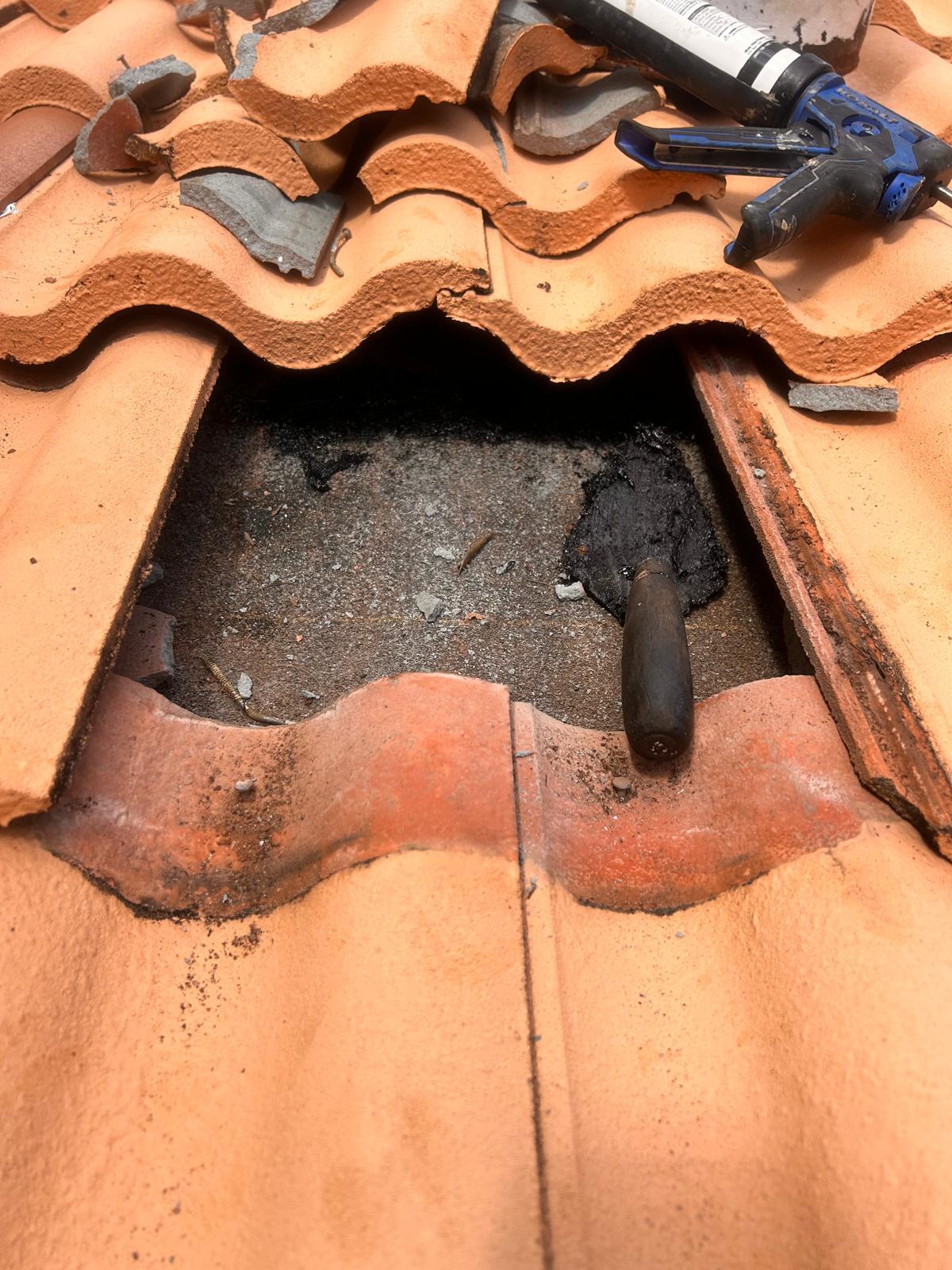
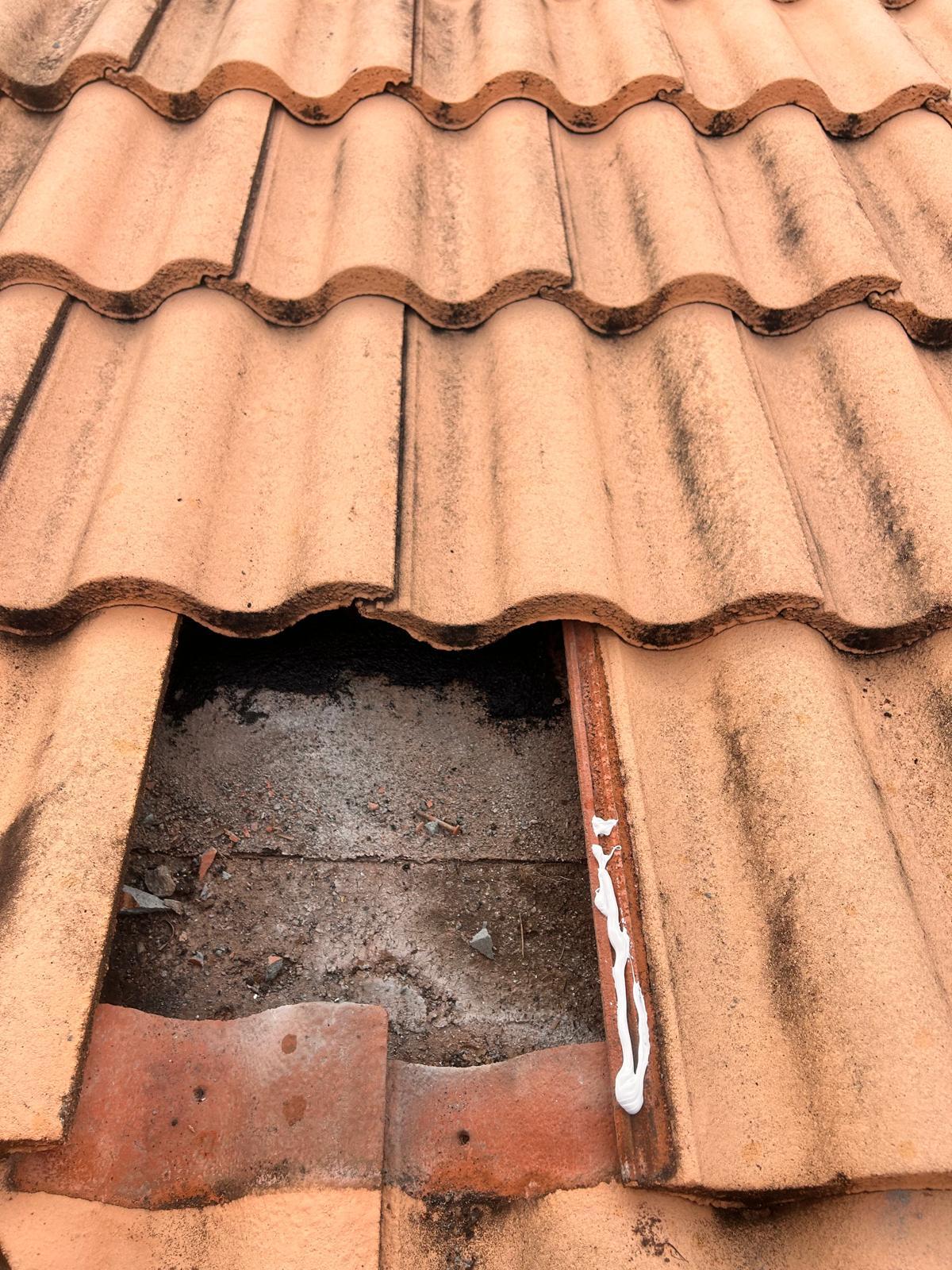
We lift the tiles across the affected area, cut out the failed membrane, and patch it with modified bitumen and new peel-and-stick underlayment before the original tiles go back down. On a 20-year-old roof we expect to find more failure than the stain suggested — we photograph it and show you before we close it up.
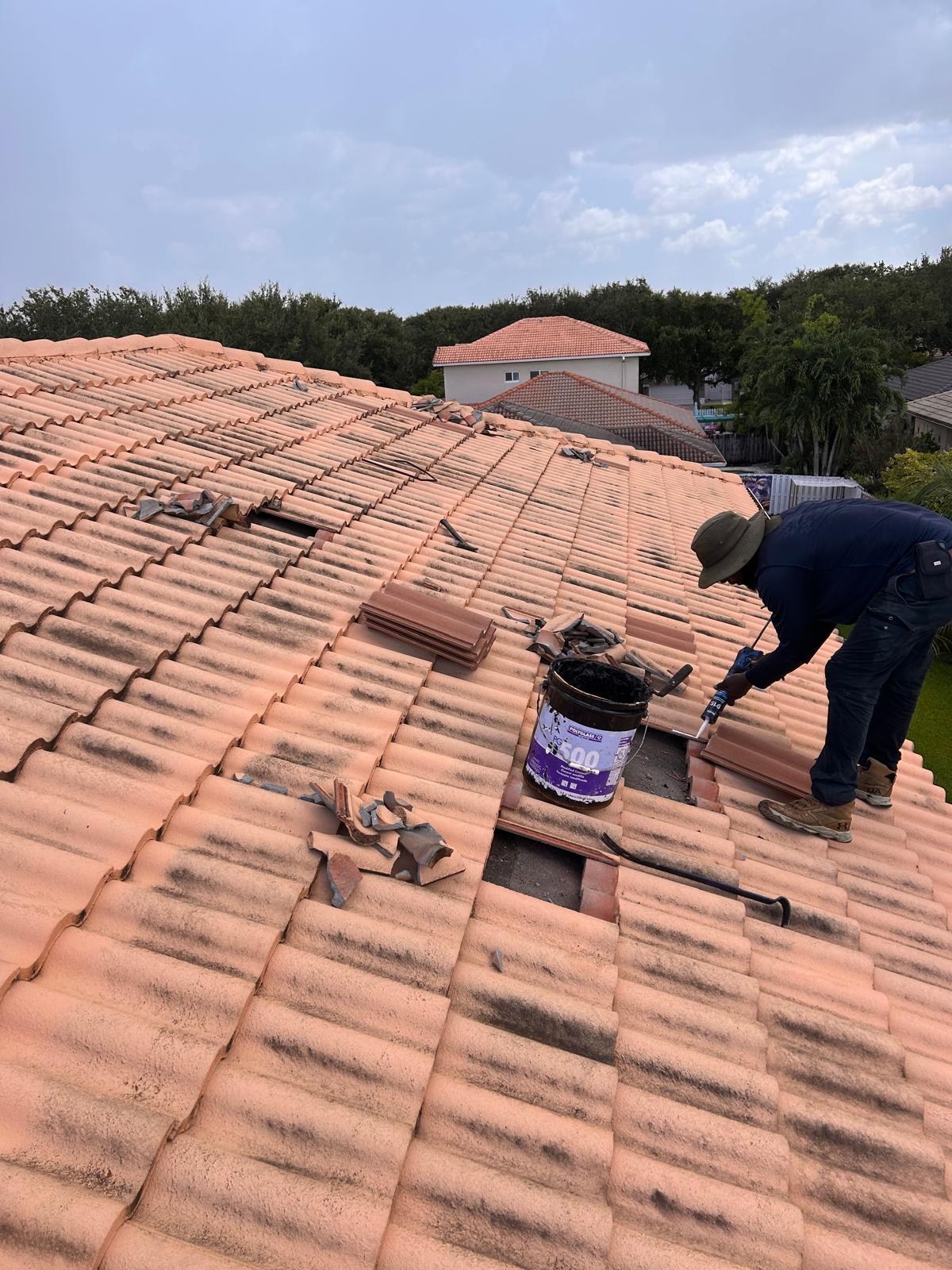
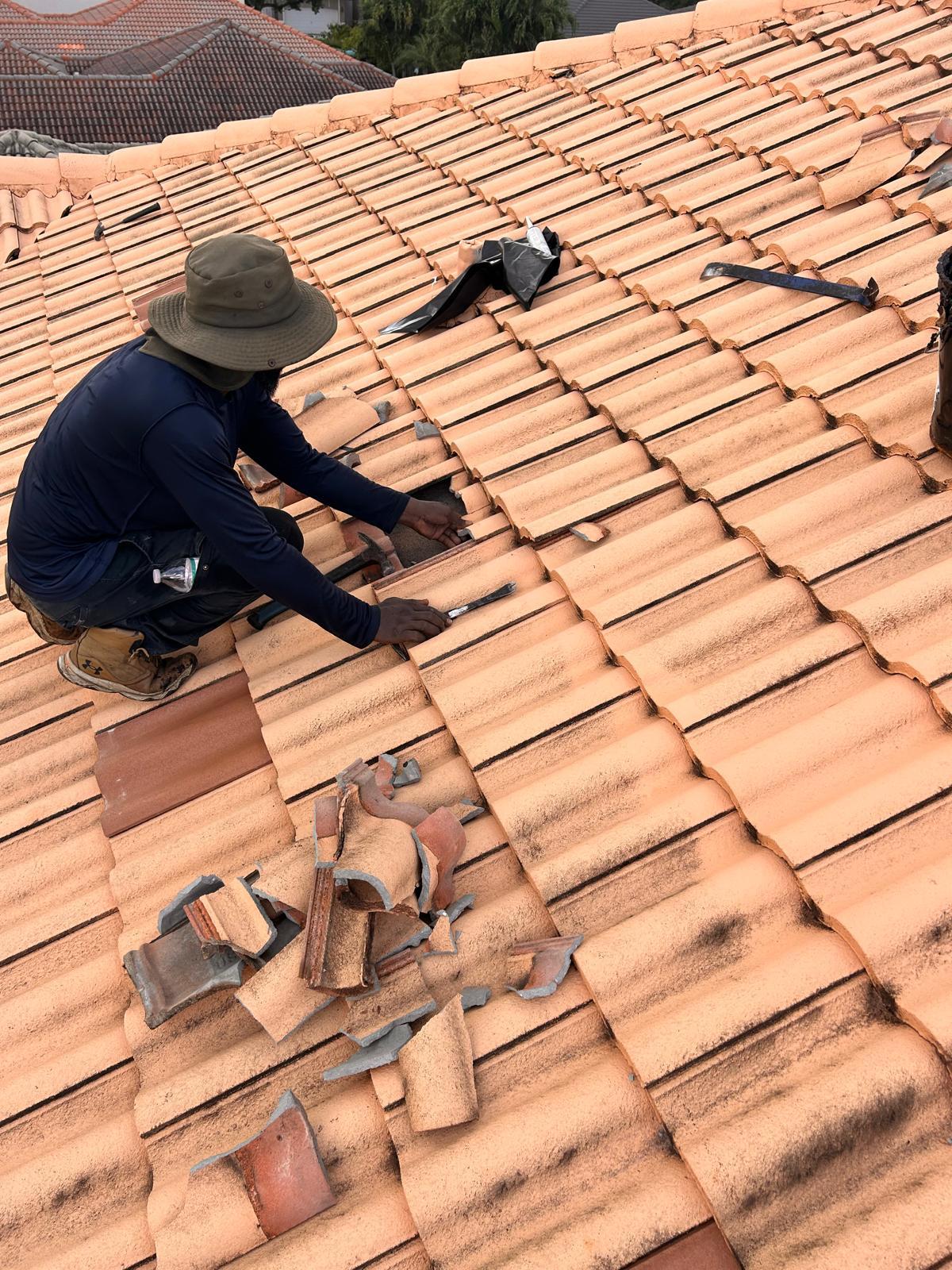
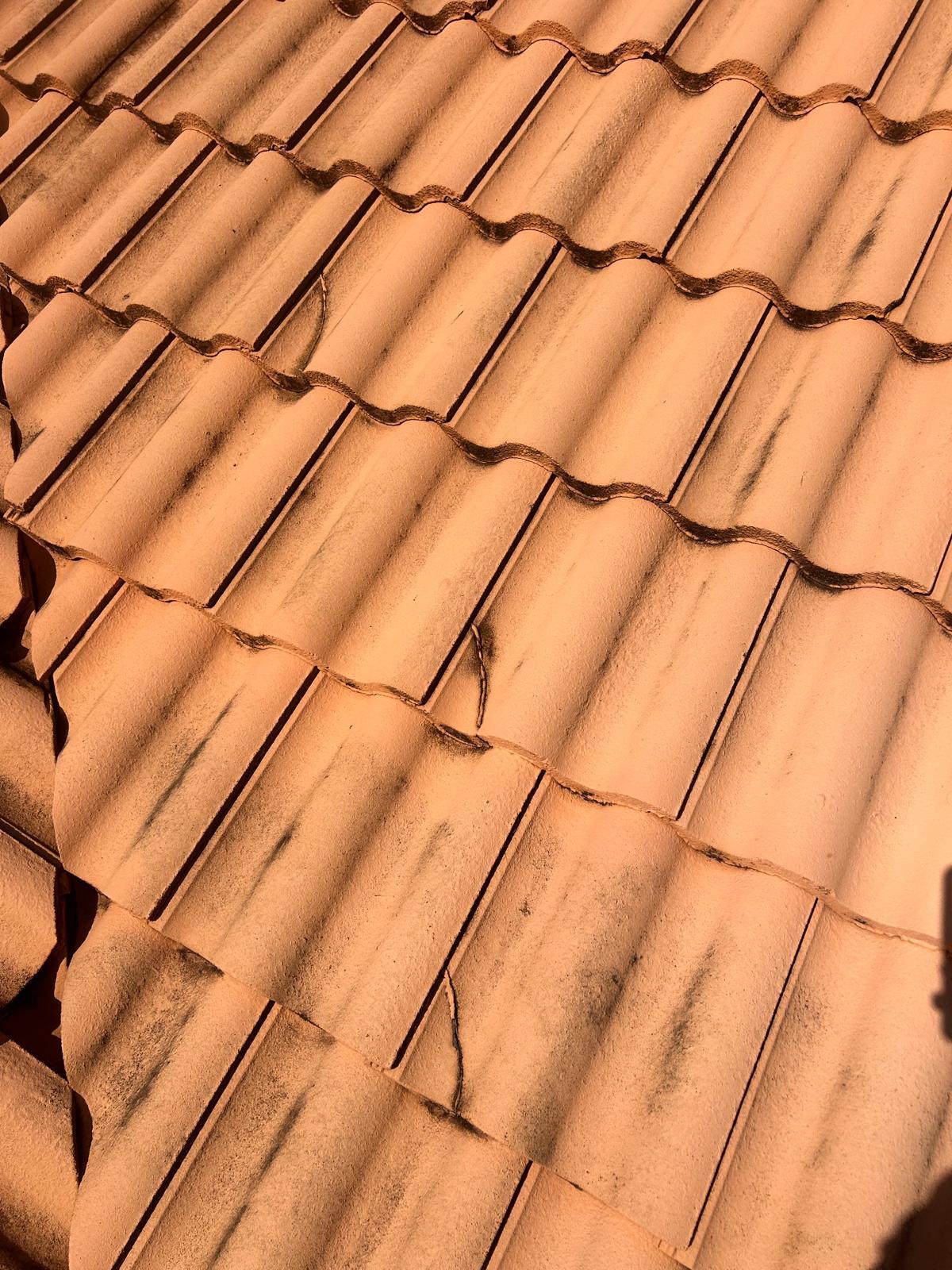
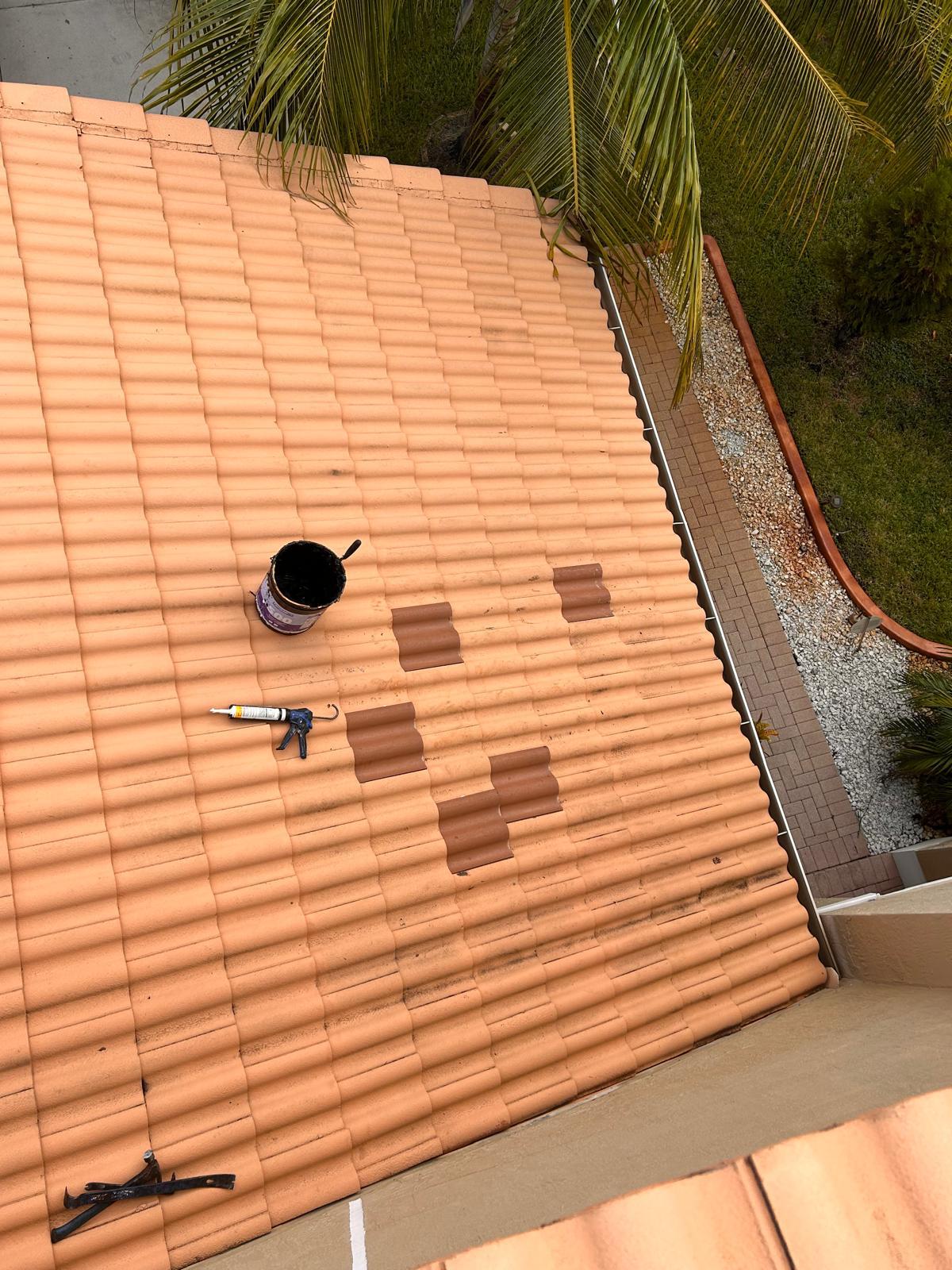
Broken tile replacement
Tiles crack from storm debris, falling branches, and — most often — from someone walking the roof who shouldn't have. A cracked or slipped tile leaves the underlayment beneath it exposed to direct UV, and unprotected underlayment fails in months rather than decades.
We source tiles matching your existing profile and set them in code-approved adhesive. One honest warning: new tiles will not match twenty years of weathering exactly. You can see it in these photos — the replacements read darker. It fades toward the surrounding tile over the first year or two, and we'd rather tell you now than have you discover it from the driveway.
The homeowner here wasn't leaking. Their insurance carrier inspected the roof, found broken tiles, and sent a notice requiring every one of them replaced by a licensed roofing contractor — with photographs as proof.
We replaced 42 broken tiles in the same profile. We could not source an exact colour match, so we documented the work in photos and video and worked directly with the homeowner and the carrier until the file was closed. That documentation is the part that actually satisfies an insurer.
Vents, goose necks and flashing
Plenty of tile roof leaks have nothing wrong with the tile. Every vent, goose neck and pipe penetration is a hole cut through the roof, sealed by flashing and mastic that ages faster than the tile around it — and once it opens up, water runs straight down the penetration.
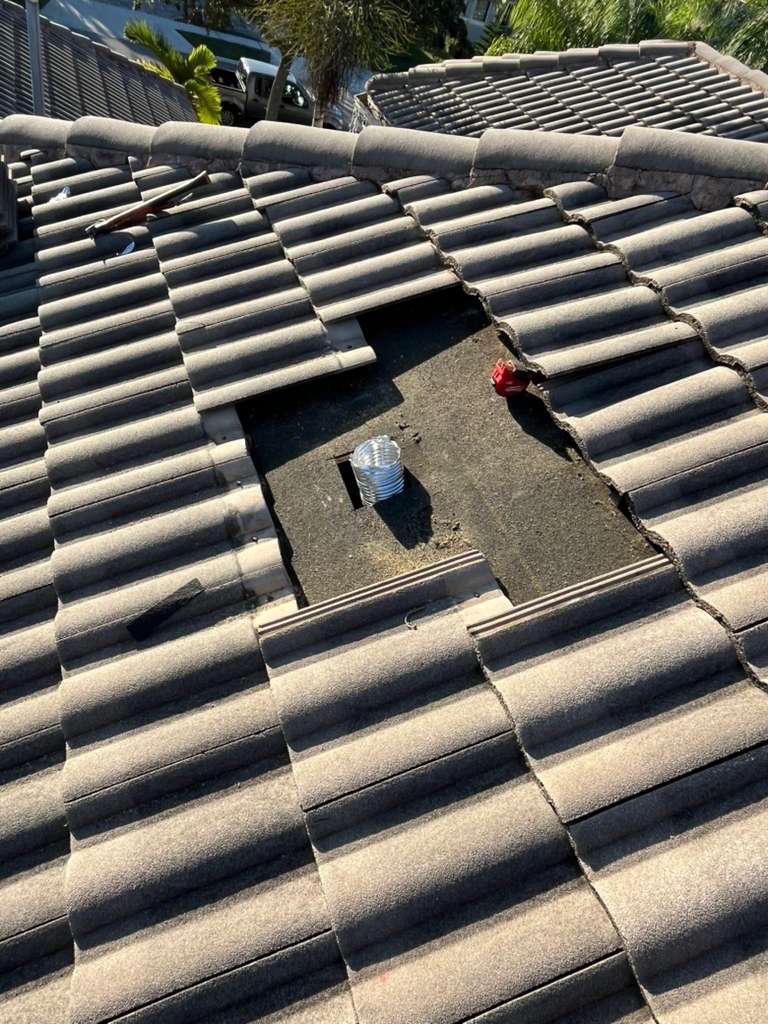
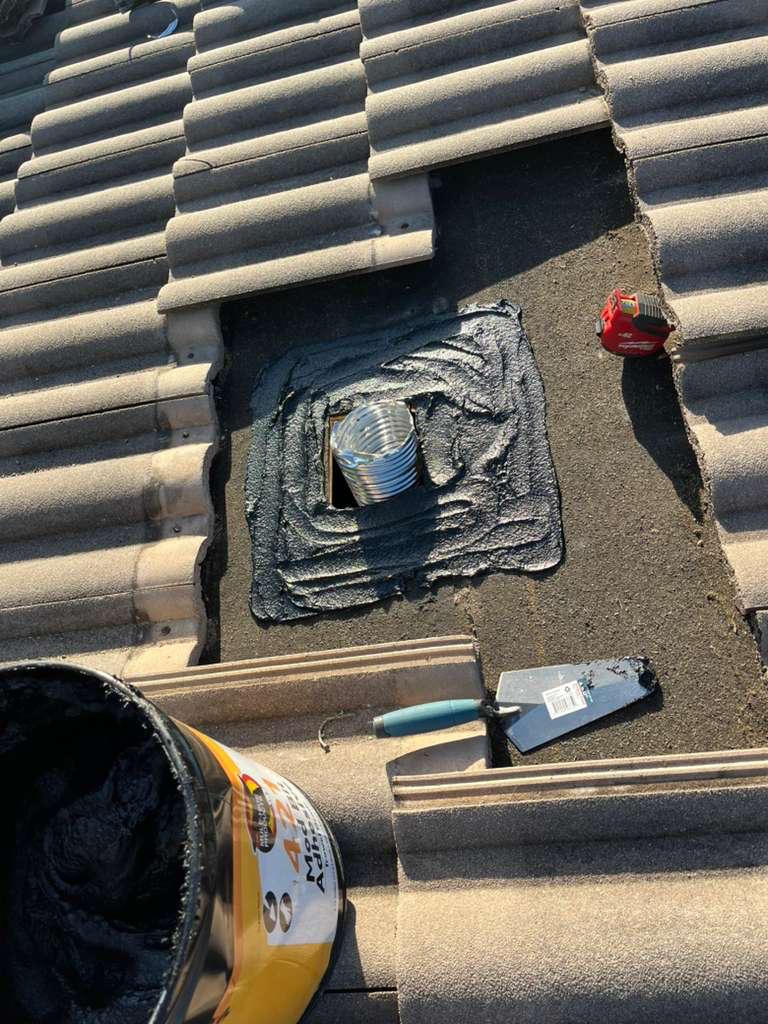
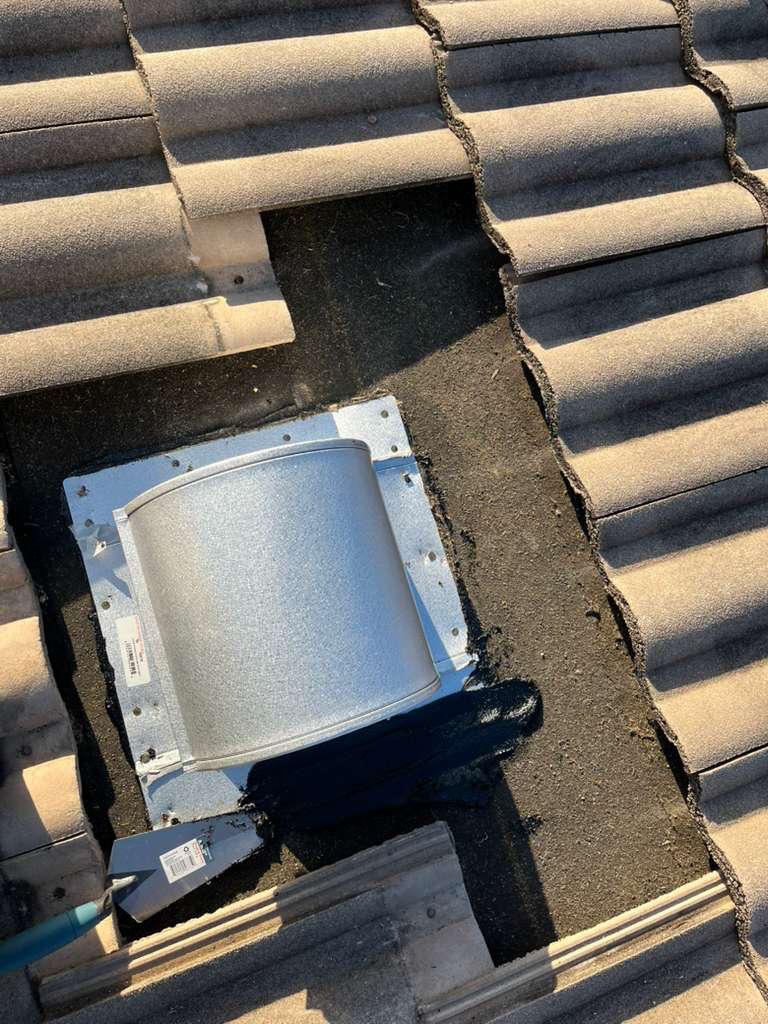
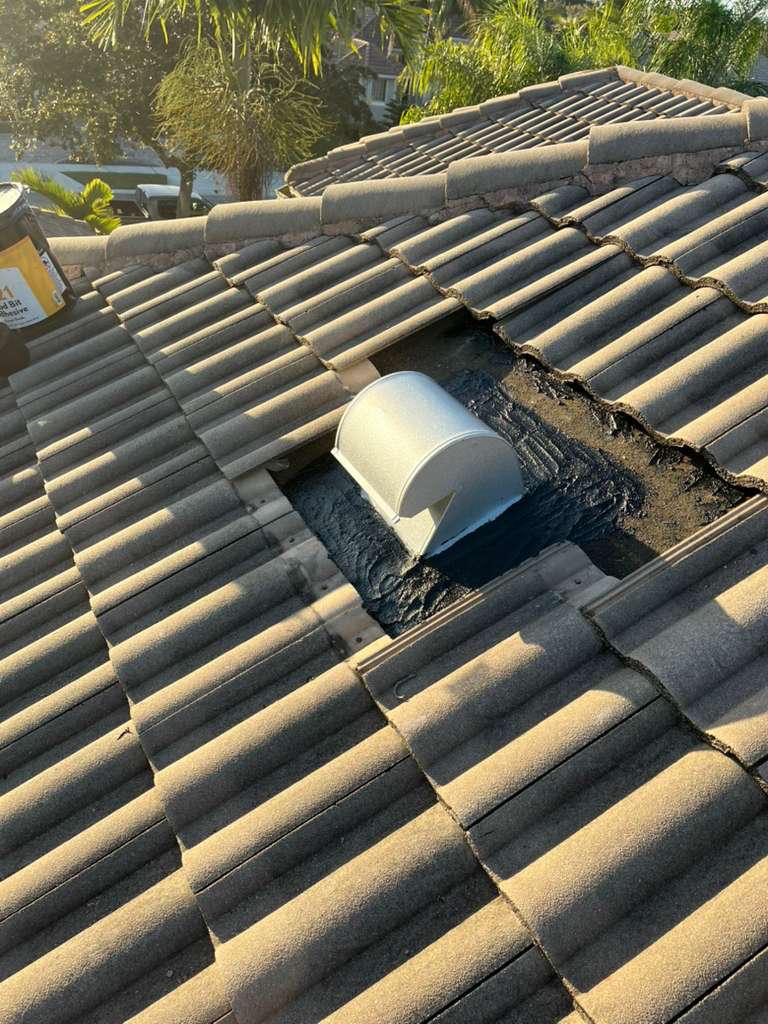
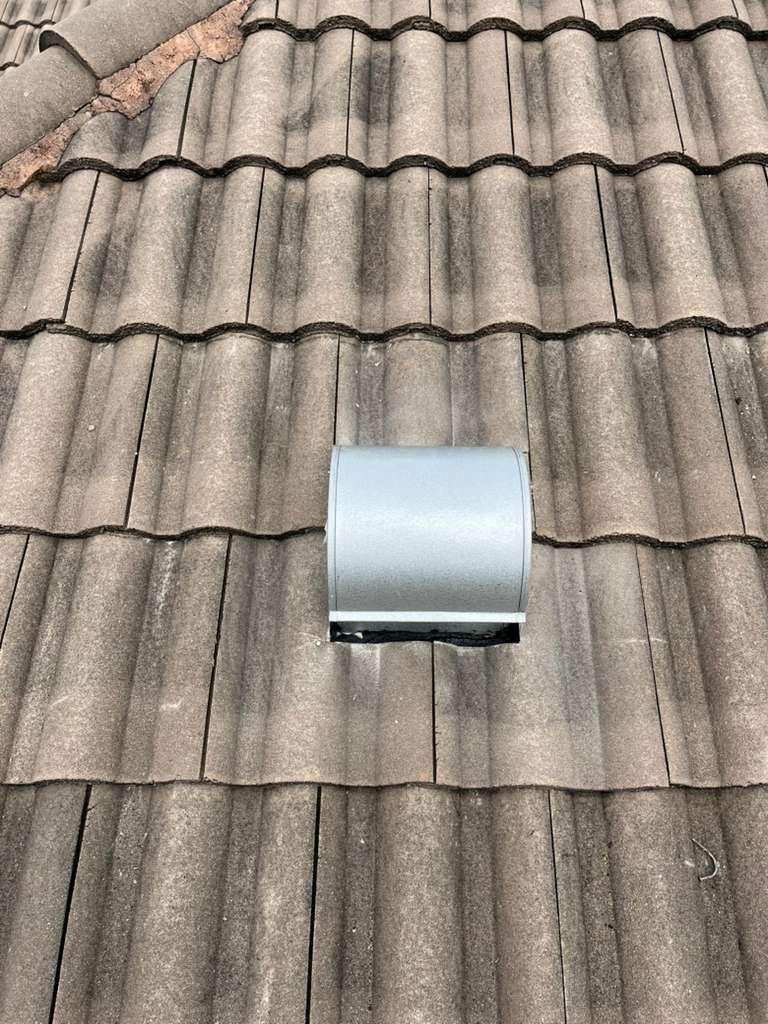
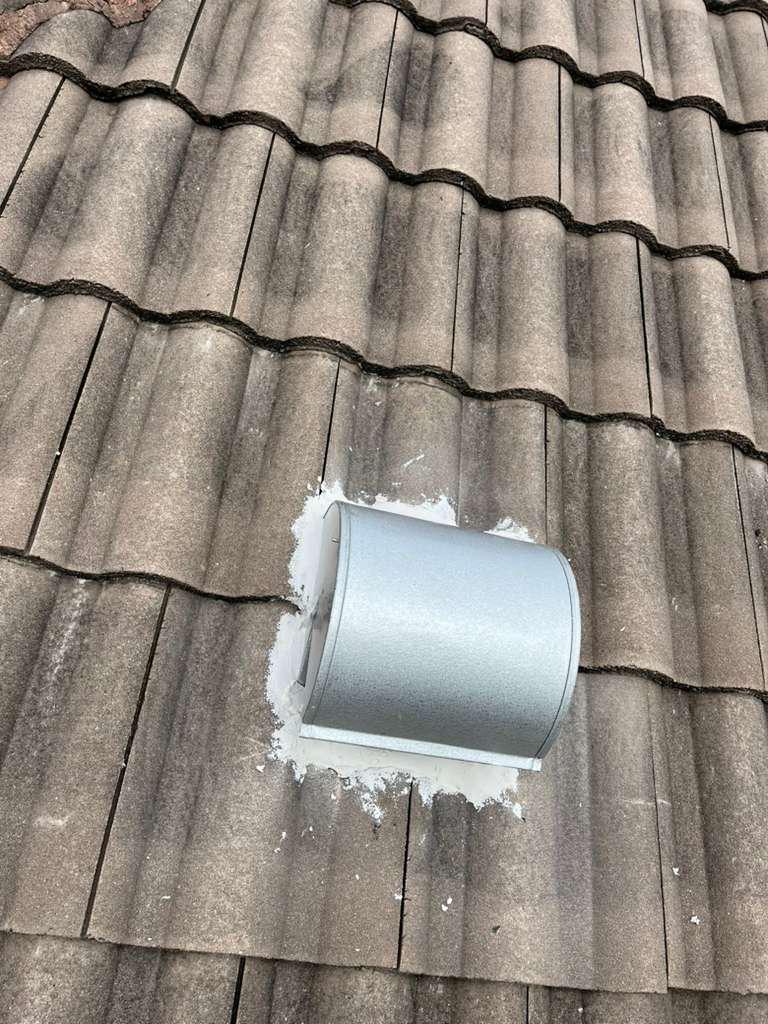
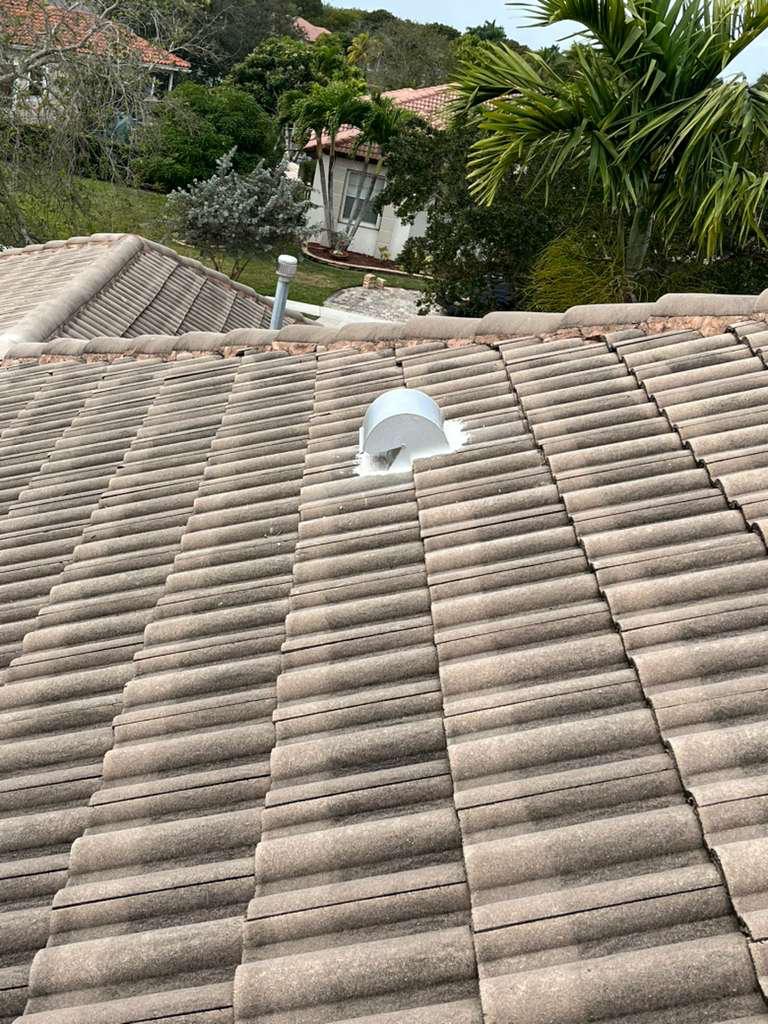
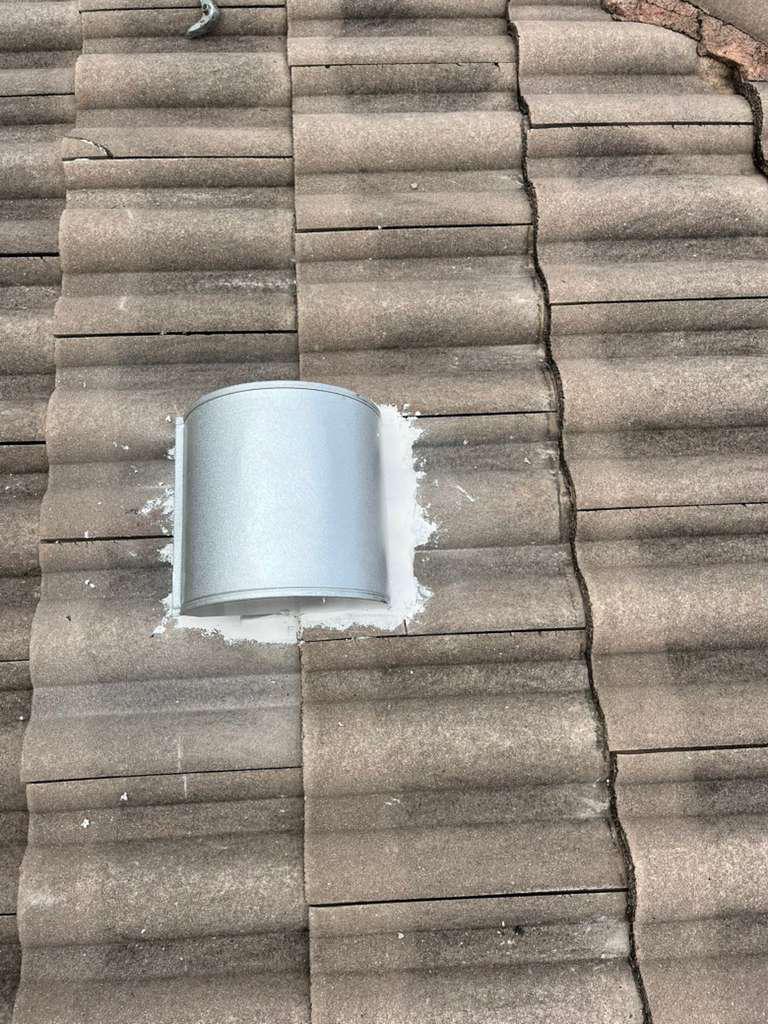
This job, start to finish. The homeowner called about a leak coming from where the goose neck sits. We lifted the tiles, opened it up, and found the goose neck rotted through with holes in it. We replaced it — and put their original tiles back.
Architectural and 3-tab shingle
Shingle replacement
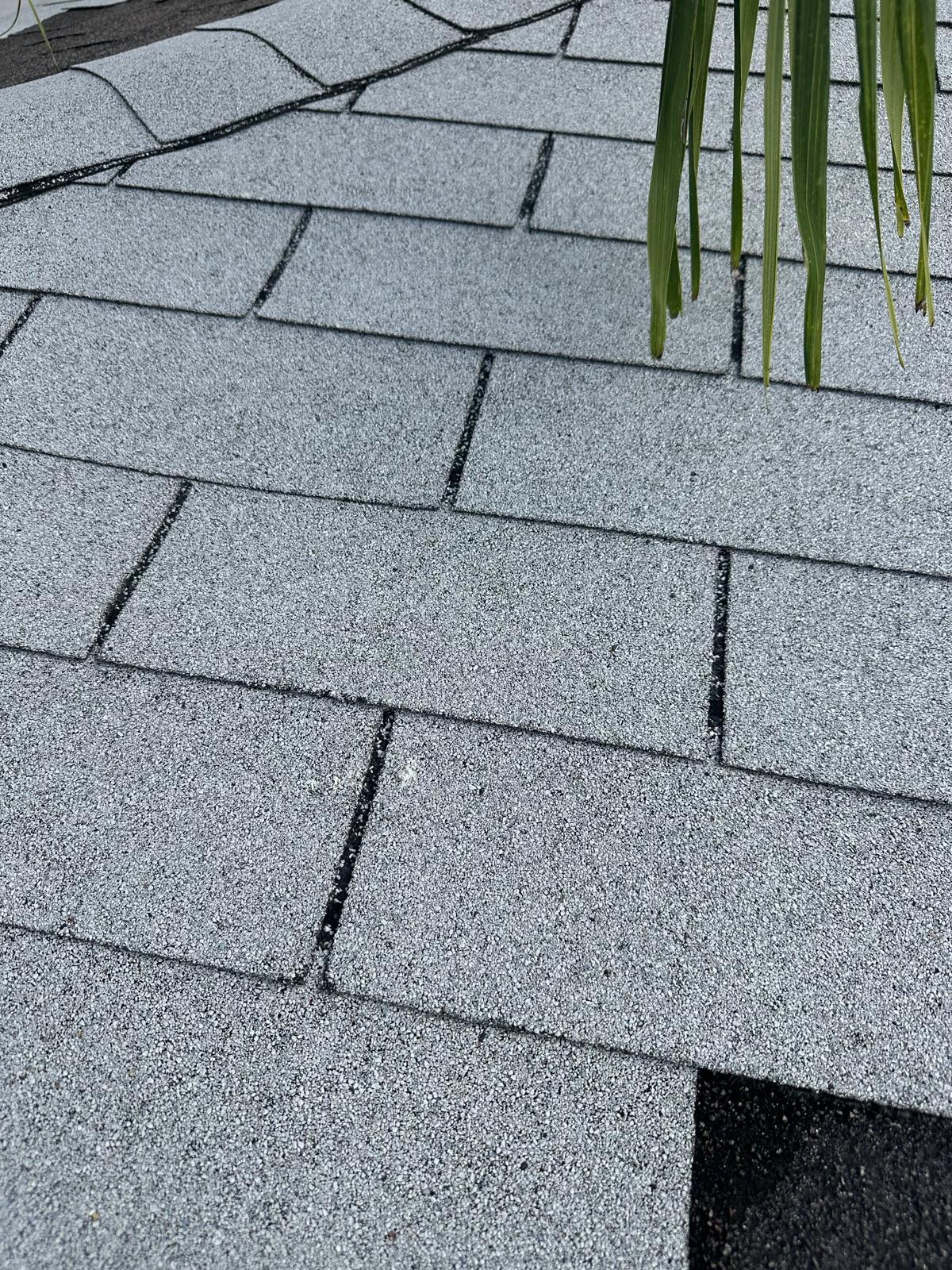
Storms and hurricanes lift and blow off shingles, and every gap left behind puts bare wood decking in the weather. Decking that stays wet rots, and rotted decking turns a targeted repair into a structural one.
We replace the affected shingles to the current TAS-107 wind standard with the required 6-nail pattern — not the four nails a lot of older South Florida roofs were built with.
The job shown here wasn't storm damage at all — the leak was coming from a goose-neck vent that had rotted through with age. We replaced the vent, repaired the underlayment around it, and re-shingled the section.
Underlayment repair beneath shingles
Same principle as tile: the shingles shed water, the underlayment is what actually stops it. If shingles have been missing for a while, the felt or synthetic beneath them has usually been sunbaked and torn.
Replacing shingles over failed underlayment hides the leak for a season and then it comes back — so we pull the course and repair the layer that actually matters.
New vent penetrations through a shingle roof
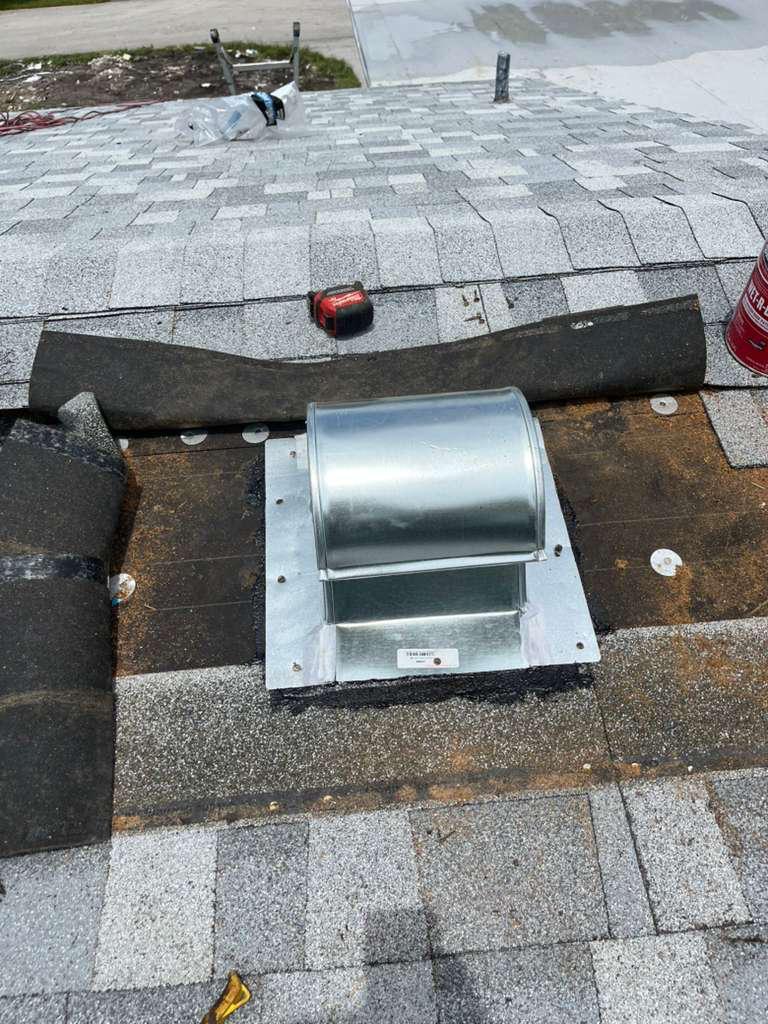
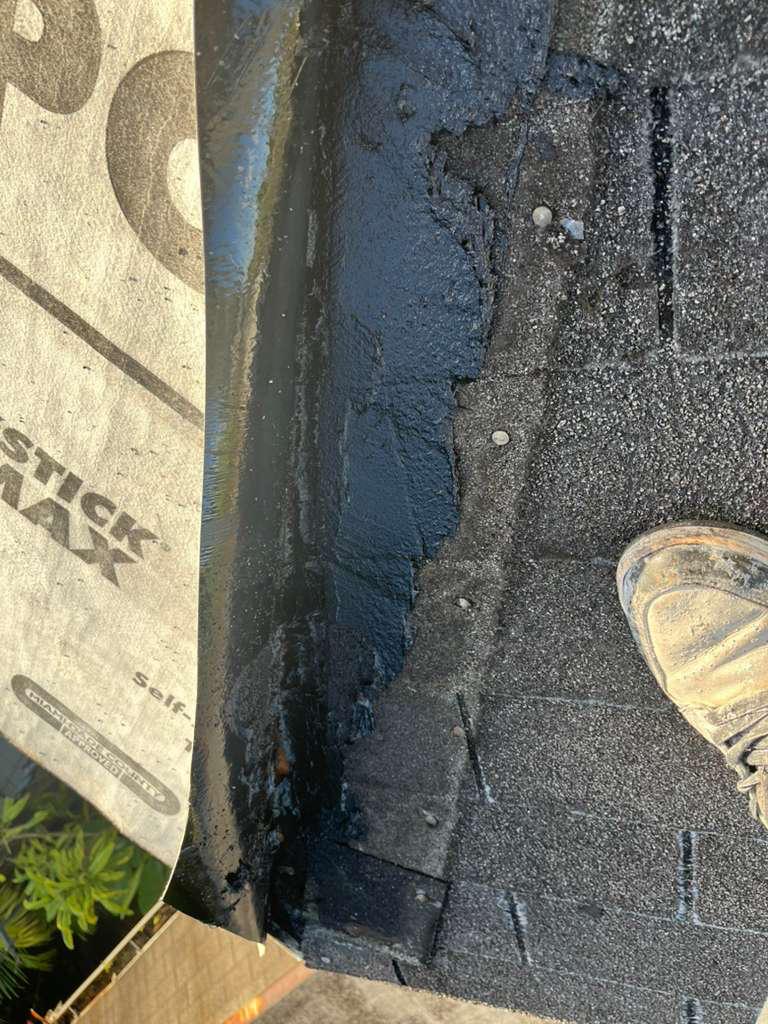
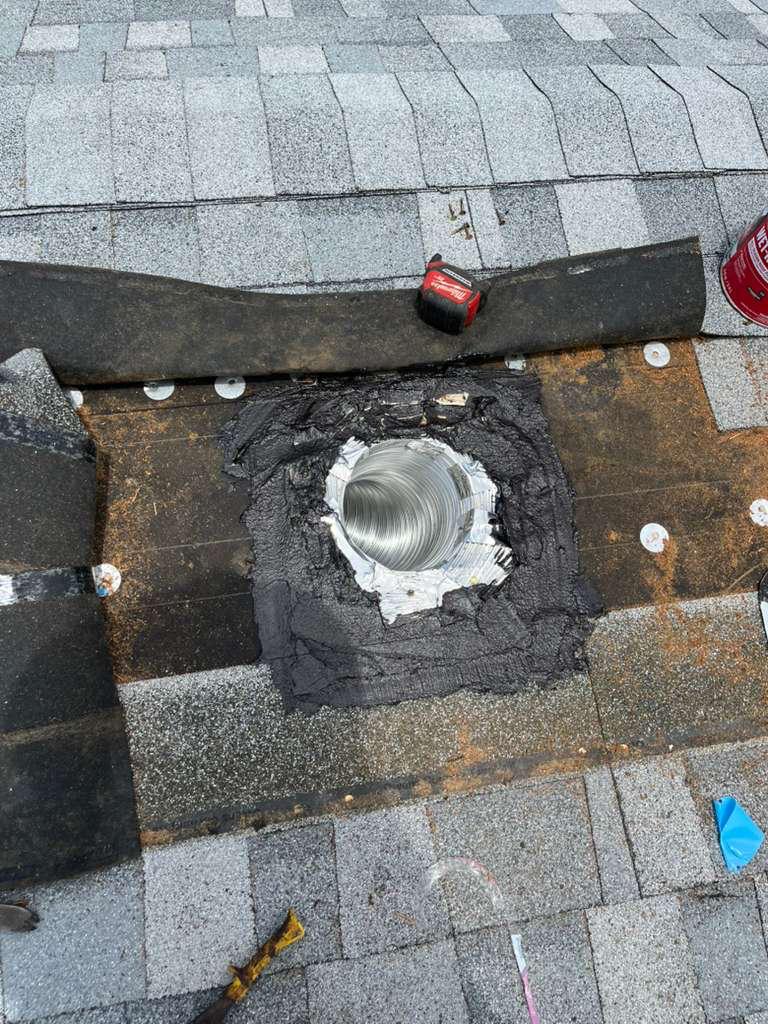
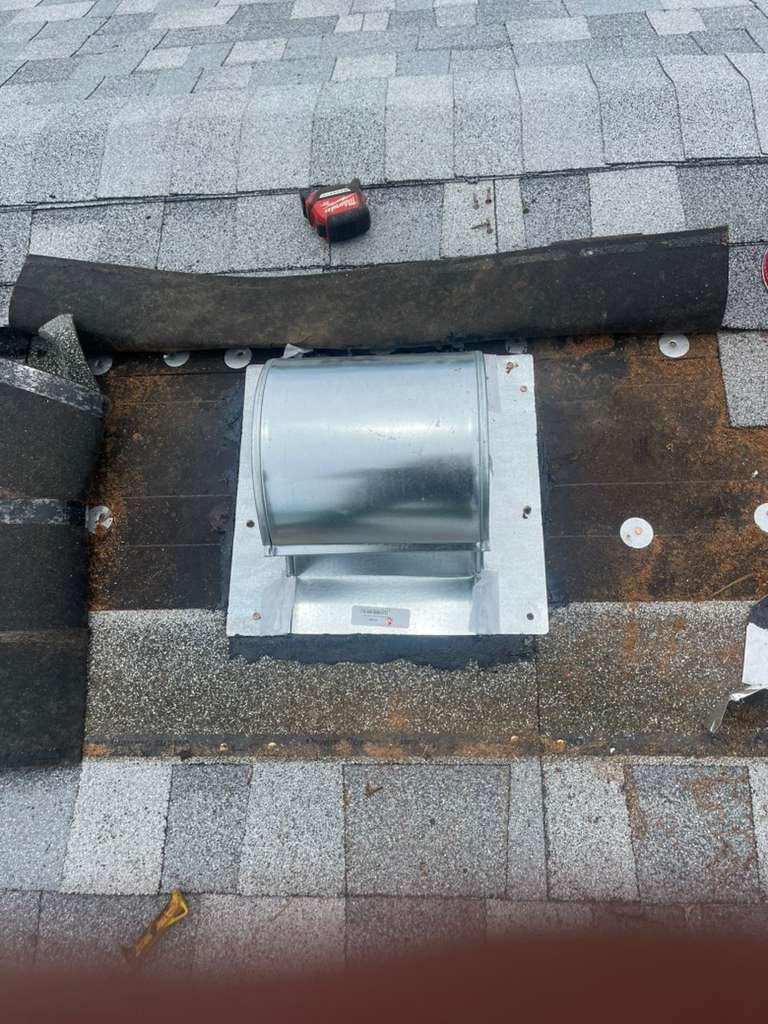
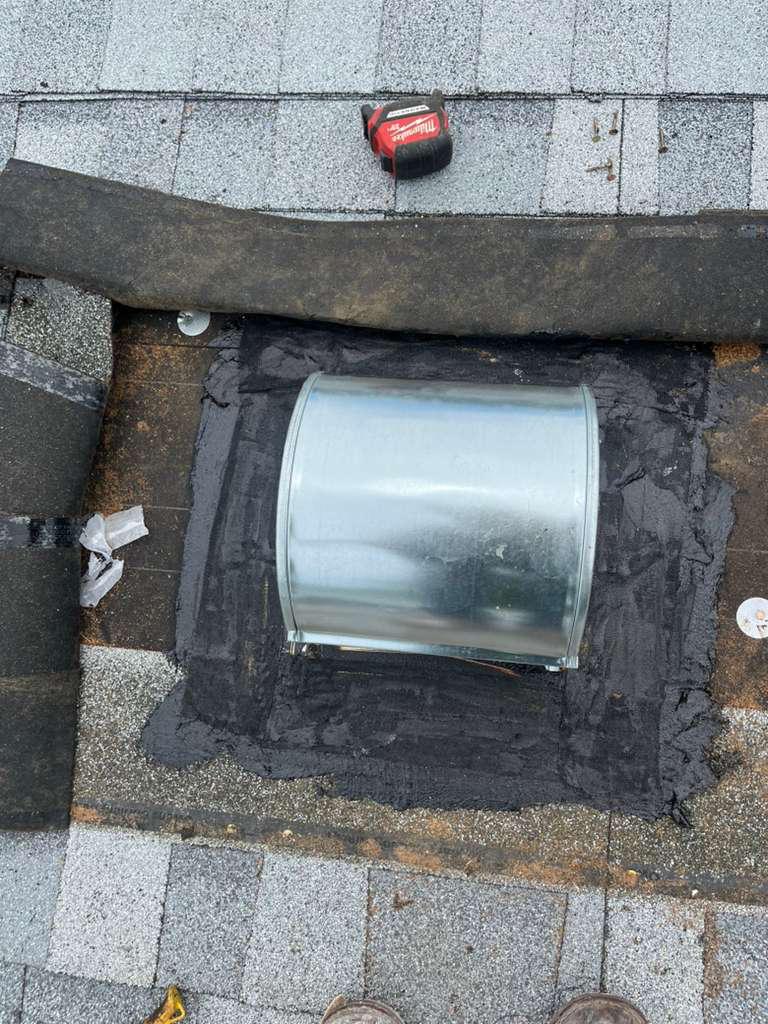
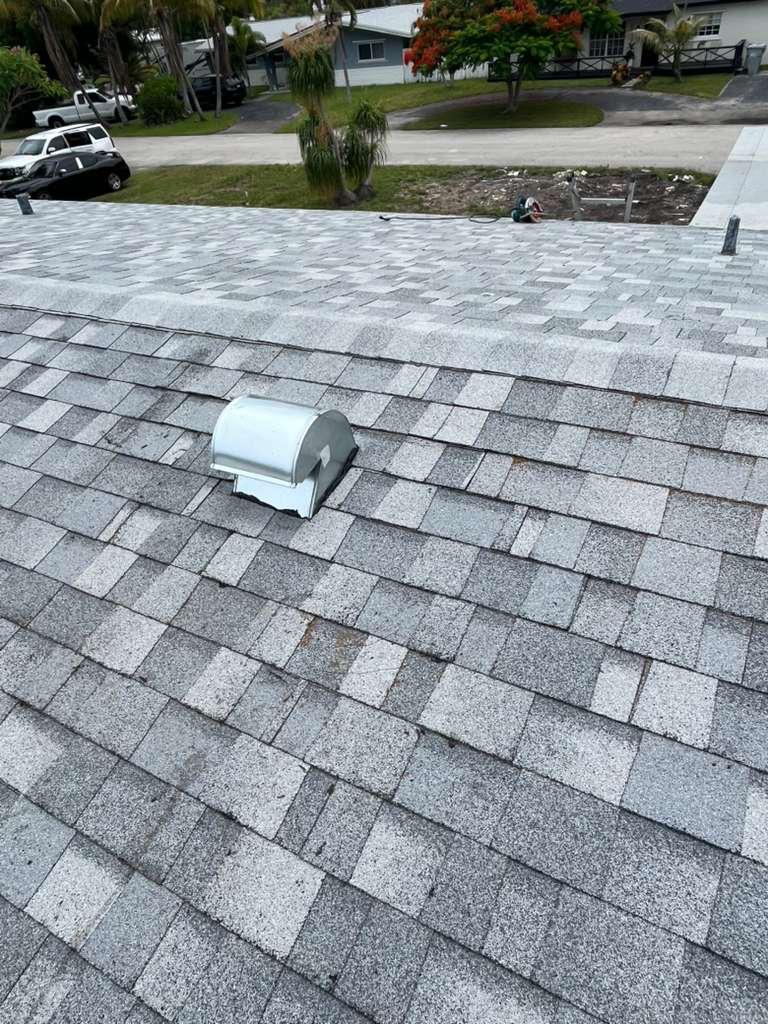
Not every roof job is a repair. This homeowner was adding a kitchen exhaust and wanted the duct run all the way up and out through the roof rather than vented into the attic — which is the right way to do it, and the way that needs a roofer rather than an appliance installer.
This job, start to finish. We opened the shingles, cut the deck, brought the duct up, set and sealed a new goose-neck vent, and reinstalled the same shingles in the same colour. A new hole in a sound roof is only as good as the flashing around it — done badly, you have bought yourself a leak.

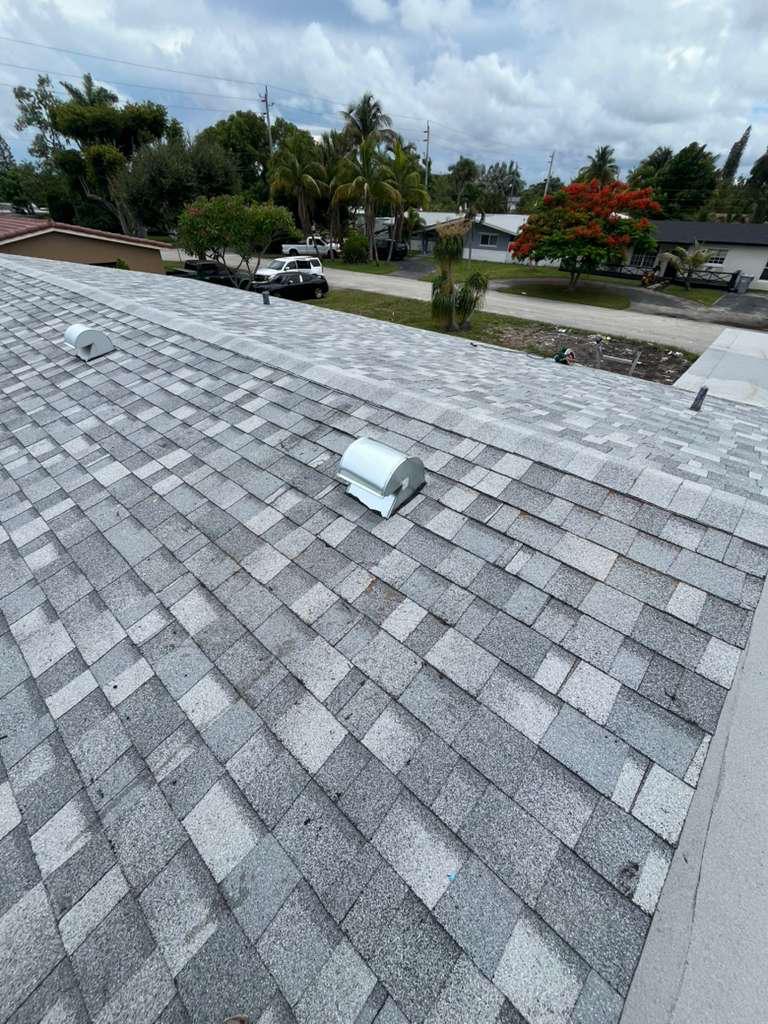
Leak repair: decking, underlayment and shingles
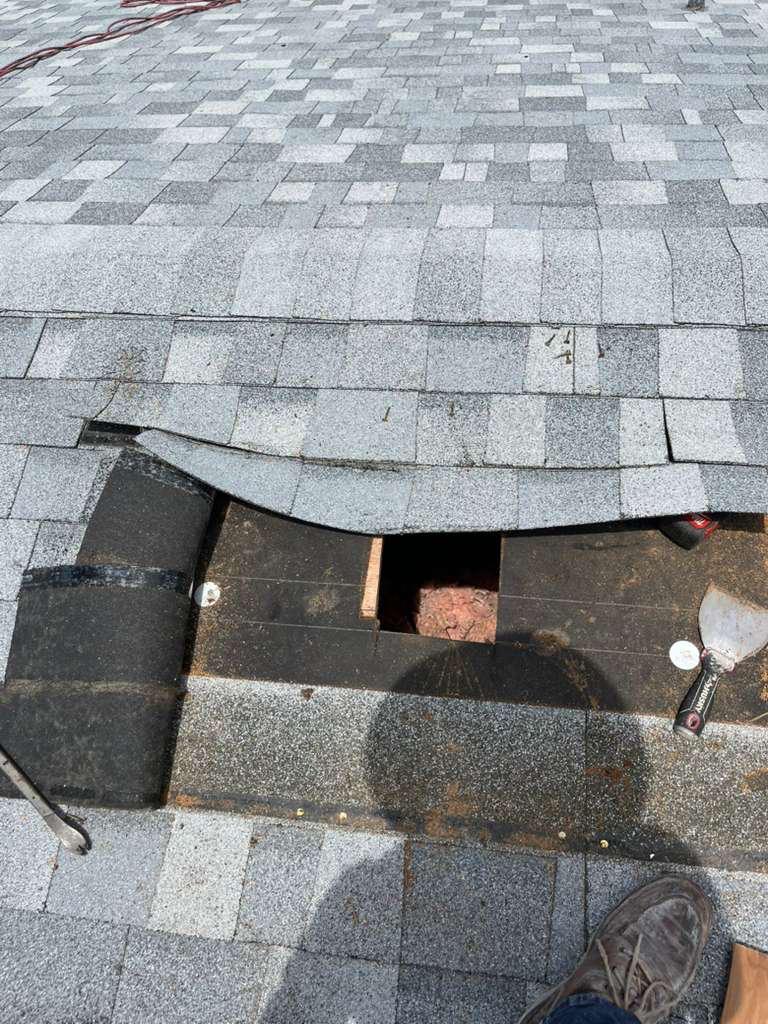
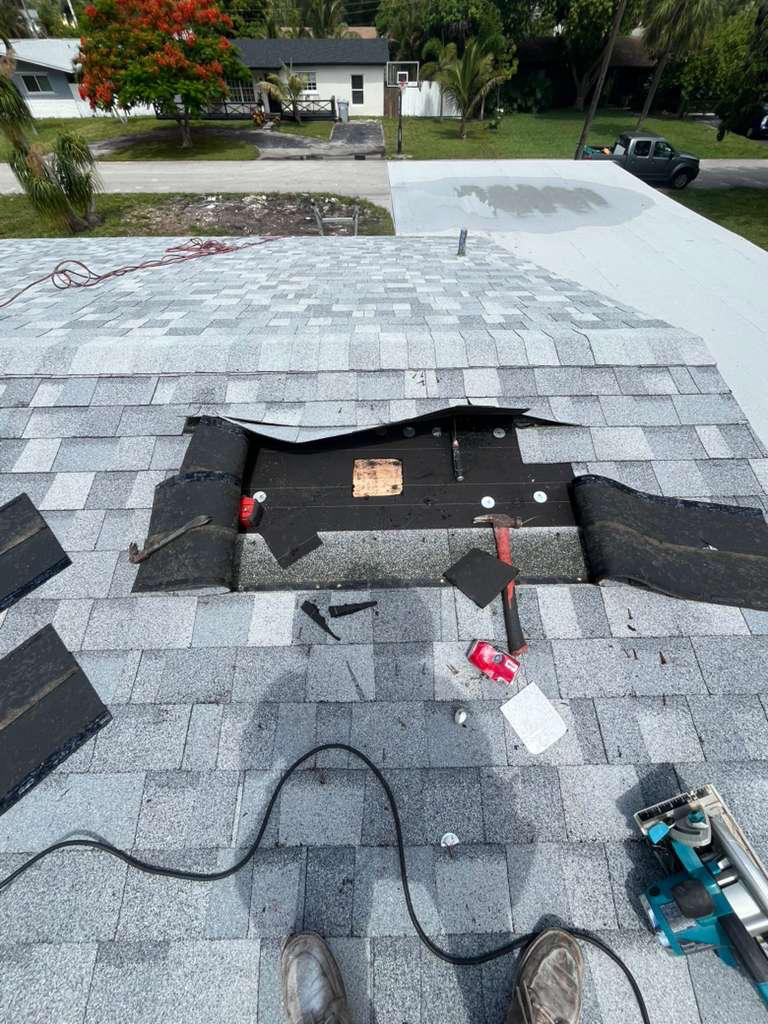
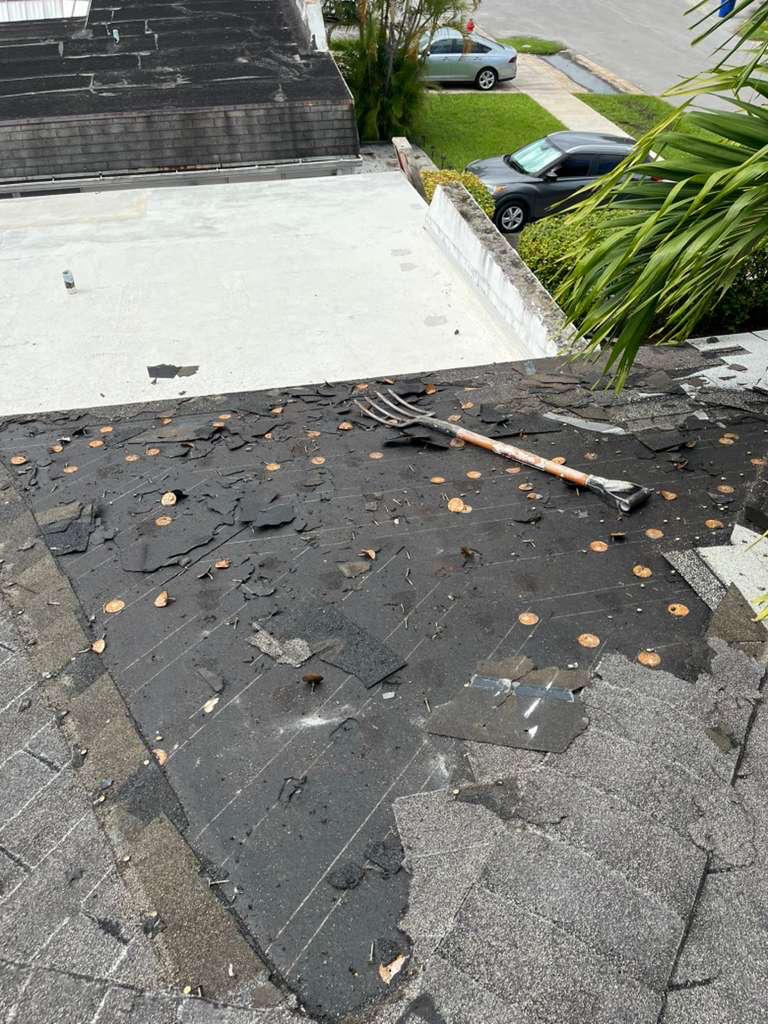
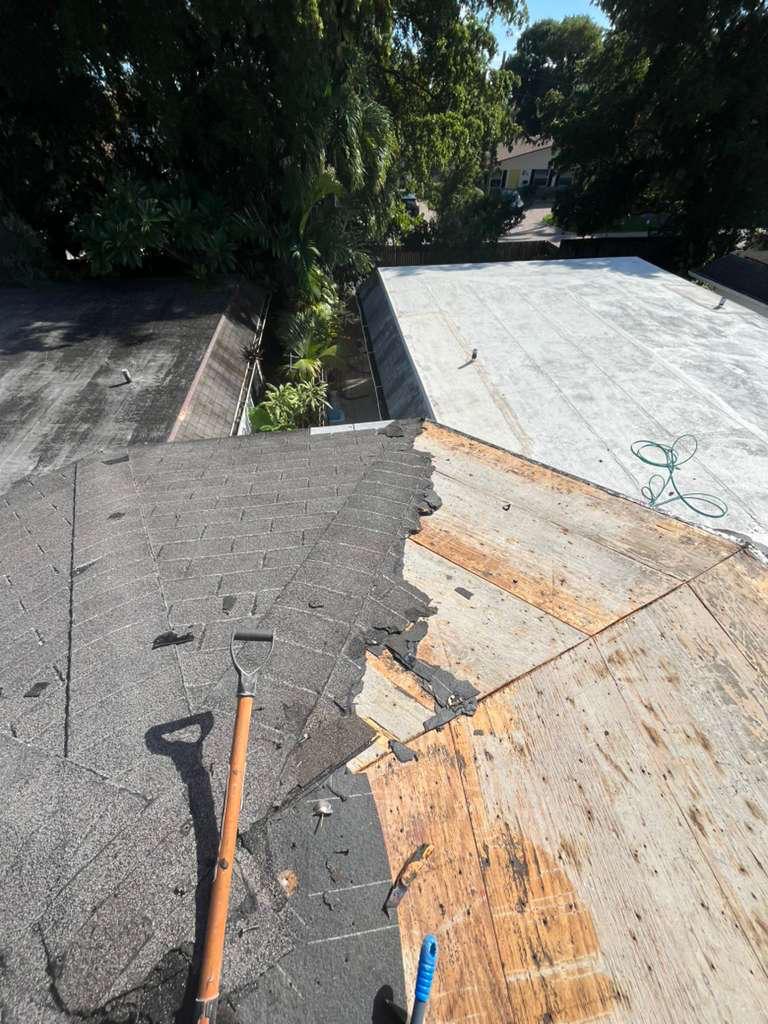
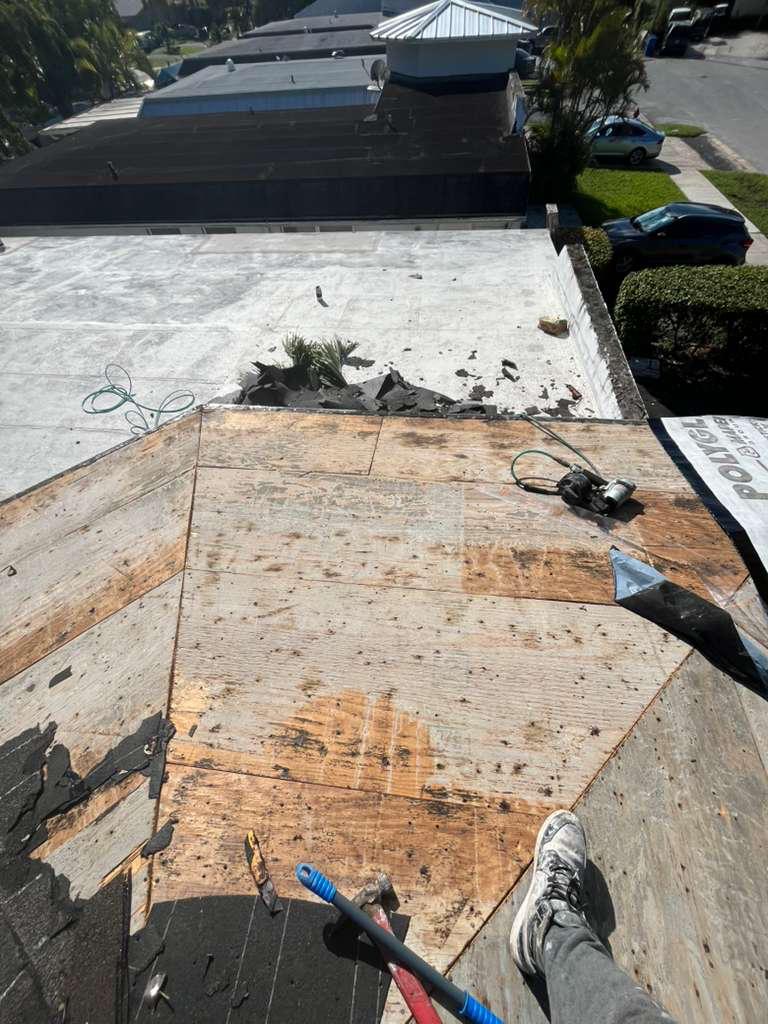
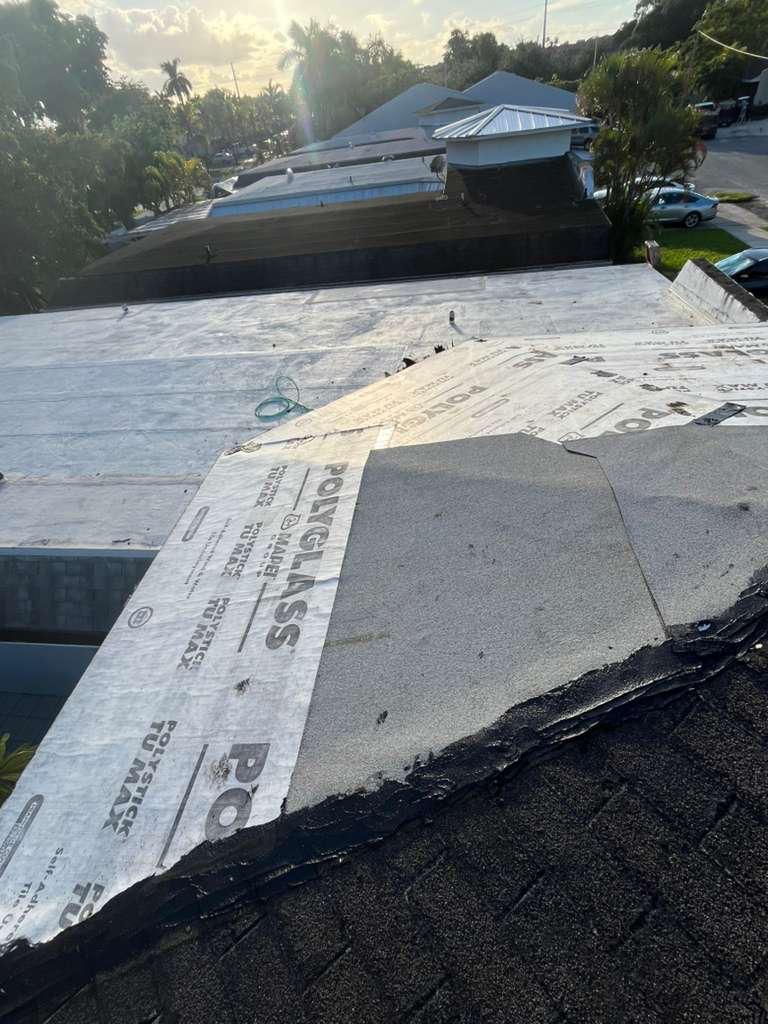
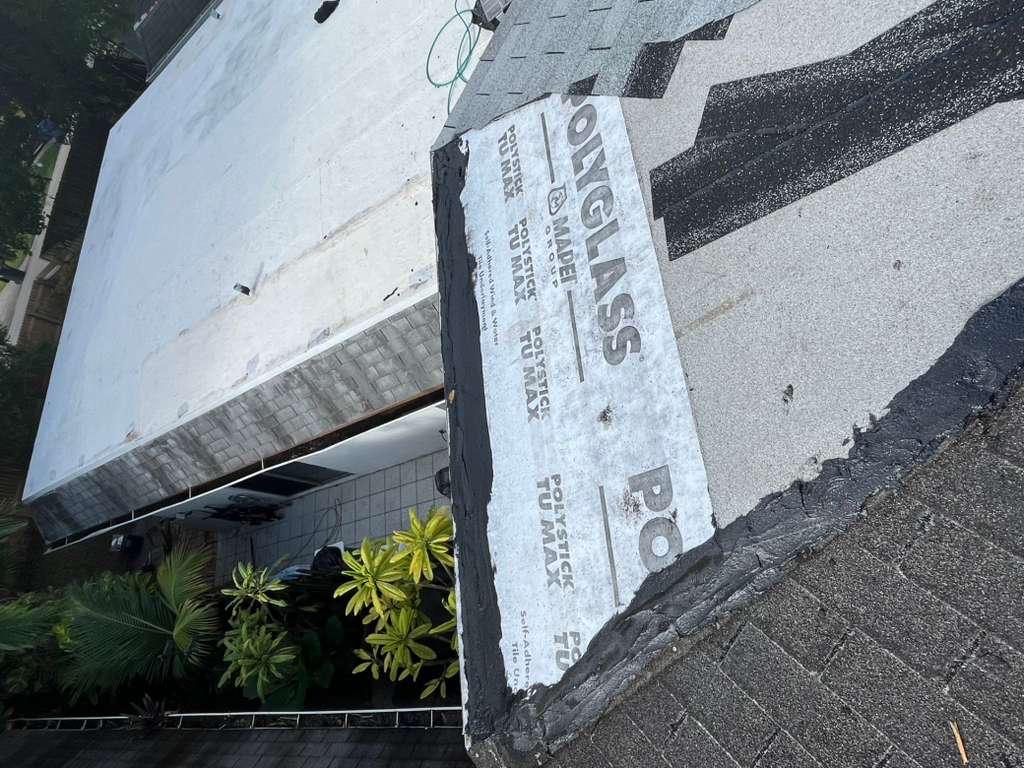
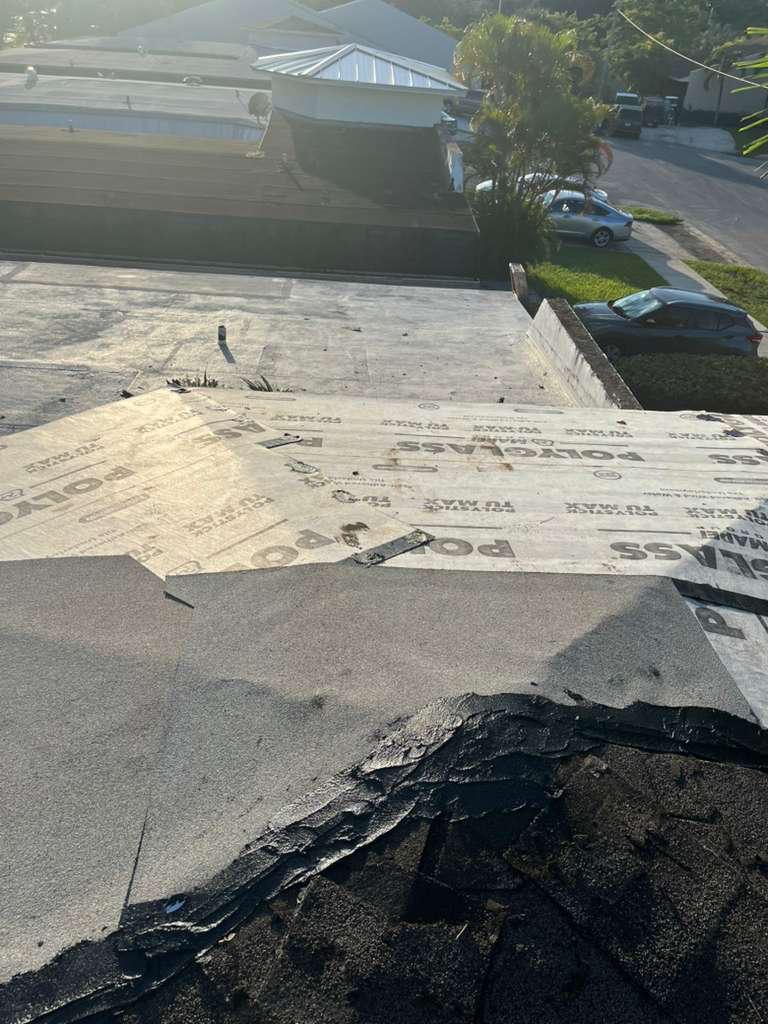
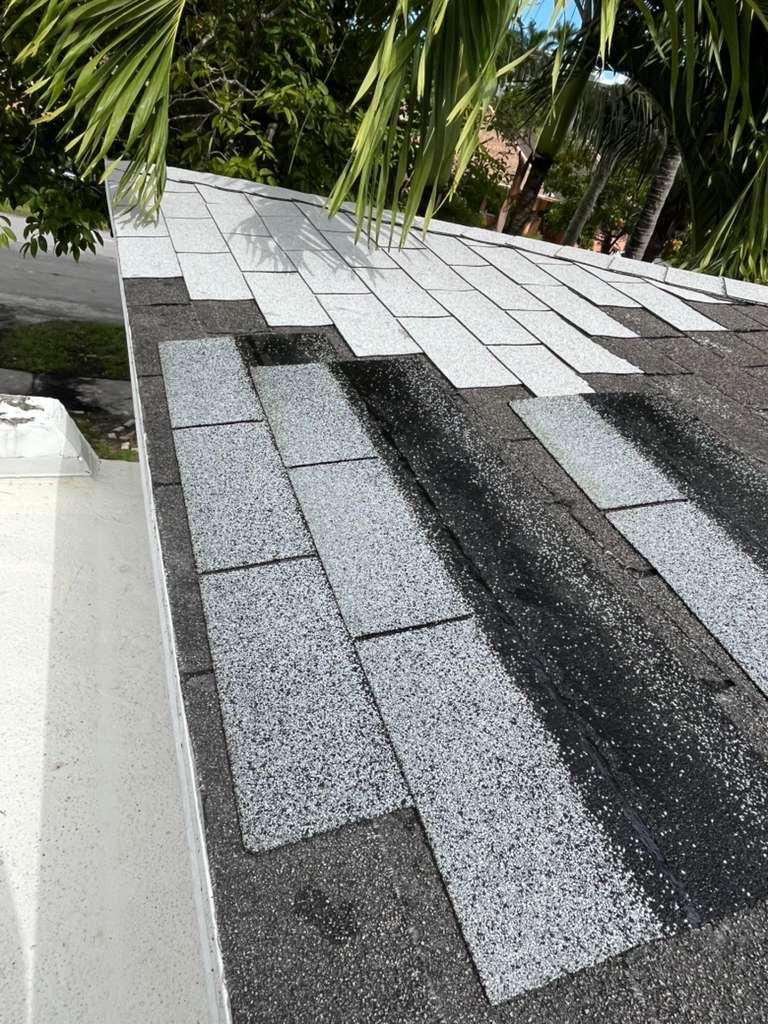
This homeowner called with a leak. We went up to find it — and once the shingles came off, the answer was the whole assembly: soft plywood, failed underlayment, and shingles at the end of their life on that slope.
This job, start to finish. We stripped the slope, replaced the plywood decking, laid new self-adhered underlayment, and installed new shingles matched to the existing roof. A patch over that deck would have leaked again by the next season.
Not sure which of these your roof needs? That's what the inspection is for.
Free inspection and written estimate →Repair, or replace?
There's an obvious incentive for a roofer to tell you that you need a whole new roof. We'd rather tell you the truth and keep you as a customer for the next twenty years.
There's also a code limit that decides it for both of us: Florida's 25% rule. If more than a quarter of the roof needs work within a 12-month period, the whole system generally has to be brought up to current code — so repairing past that point isn't legal, or in your interest.
Read our guide to the 25% rule →A repair usually makes sense when
The damage is isolated to one area
The roof still has years of service life left
The decking underneath is sound
The work stays inside the 25% threshold
Replacement is the better call when
Leaks are appearing in more than one place
The underlayment has failed across the roof
The roof is near or past its expected lifespan
Your insurer is asking for a full replacement
If it's a replacement, see what a new roof costs in Broward — real ranges, by material.
What you're covered for, stated plainly.
Repair warranties and replacement warranties are not the same thing, and plenty of contractors blur the two. Here are all four layers of cover on a repair from us, and the exact limits of each.
1-year warranty on the repaired area
Every repair carries a one-year workmanship warranty covering the specific section we worked on. If the leak comes back in that area, we come back — no second invoice for the same problem.
It covers our labour on that area, not unrelated parts of an ageing roof. We'd rather set that boundary now than argue about it later.
Limited lifetime, where it applies
Materials carry their manufacturer's own warranty, and several of the products we install — including shingle lines from GAF, Owens Corning and CertainTeed — carry limited lifetime coverage when installed to specification.
Terms and transferability vary by product and by manufacturer. We'll give you the actual warranty document for what goes on your roof, not a summary of it.
10-year warranty on full re-roofs
Our 10-year workmanship warranty applies to full roof replacements — not repairs. We're saying so on the repair page because being clear about the shorter term is worth more than implying the longer one.
See roof replacement →$30,000 Contractor Directorii deposit protection
As a verified Contractor Directorii member, every registered project carries $30,000 of independent deposit protection at no cost to you — protection that doesn't depend on us still being in business. Optional $250,000 full coverage is available for 2.5% of the contract amount.
It applies to repairs and replacements alike, and it's the one layer of cover that isn't a promise from us about us.
If your claim is approved, we do the work to scope.
Storm damage repairs are often covered by insurance. We inspect the roof, photograph the damage and give you a written report and estimate you can submit to your carrier. Once a claim is approved, we complete the repair to the approved scope and provide the documentation and permit records your adjuster needs to close it out.
Photo documentation and a written report for your carrier
Repairs completed to the approved scope, with permits pulled by us
Final inspection records provided for your file
We're licensed roofing contractors, not public adjusters — we don't negotiate your claim or advise on your policy. Anyone who offers to is operating outside their licence.
The ones worth asking
If yours isn't here, call and ask. We'd rather answer it before you commit to anything.
✆ (954) 665-3231Can my roof be repaired, or do I need a whole new roof?
It depends on the age of the roof, how widespread the damage is, and the condition of the decking underneath. Isolated damage on a roof with life left in it is a repair. Widespread failure, or a roof near the end of its service life, is usually a replacement. We tell you which one you're looking at, show you the photographs, and explain why.
Why does a small leak turn into a big repair?
Because water travels. A stain on the ceiling is always smaller than the wet area above it, and the plywood decking and framing can be rotted well beyond the visible damage — as in the job above. We can't confirm the full extent until the tile and underlayment come off, which is why our estimate tells you up front which line items could move.
How much does roof repair cost in Broward County?
A minor repair is a few hundred dollars. Once decking replacement is involved, plywood runs $75–$125 per sheet installed and code requires a minimum 19/32in thickness. You get a firm written number after a free inspection, before any work starts.
Do I need a permit for a roof repair in Broward County?
Most repairs beyond very minor work require a permit in Broward County, and the 25% rule limits how much of a roof can be repaired before the whole system has to be brought up to current code. We pull the permits and handle the inspections.
Will a repair be covered by my insurance?
Sudden damage from a storm is often covered; gradual wear normally isn't. We inspect, photograph the damage, and give you a written report and estimate you can submit to your insurer. We're licensed roofing contractors, not public adjusters — we don't negotiate your claim or advise on your policy. More on roof insurance claims →
Is the repair covered by a warranty?
Yes — a 1-year workmanship warranty on the area we repaired. Materials carry the manufacturer's own warranty, and several products we install carry limited lifetime coverage where the manufacturer offers it. Our 10-year workmanship warranty applies to full roof replacements, not repairs, and we'll always tell you in writing which one you're getting. Every registered project carries $30,000 of Contractor Directorii deposit protection at no cost. Optional $250,000 full coverage is available for 2.5% of the contract amount. All of it in writing before work begins.
Roof repair across South Florida
Based in Pembroke Pines, working throughout Broward County plus Miami-Dade and Palm Beach. We know which building department you're dealing with and what your HOA will ask for.
Find out what's actually wrong.
Free inspection, photographs of what we find, and a written estimate. No charge, and no obligation to use us.