
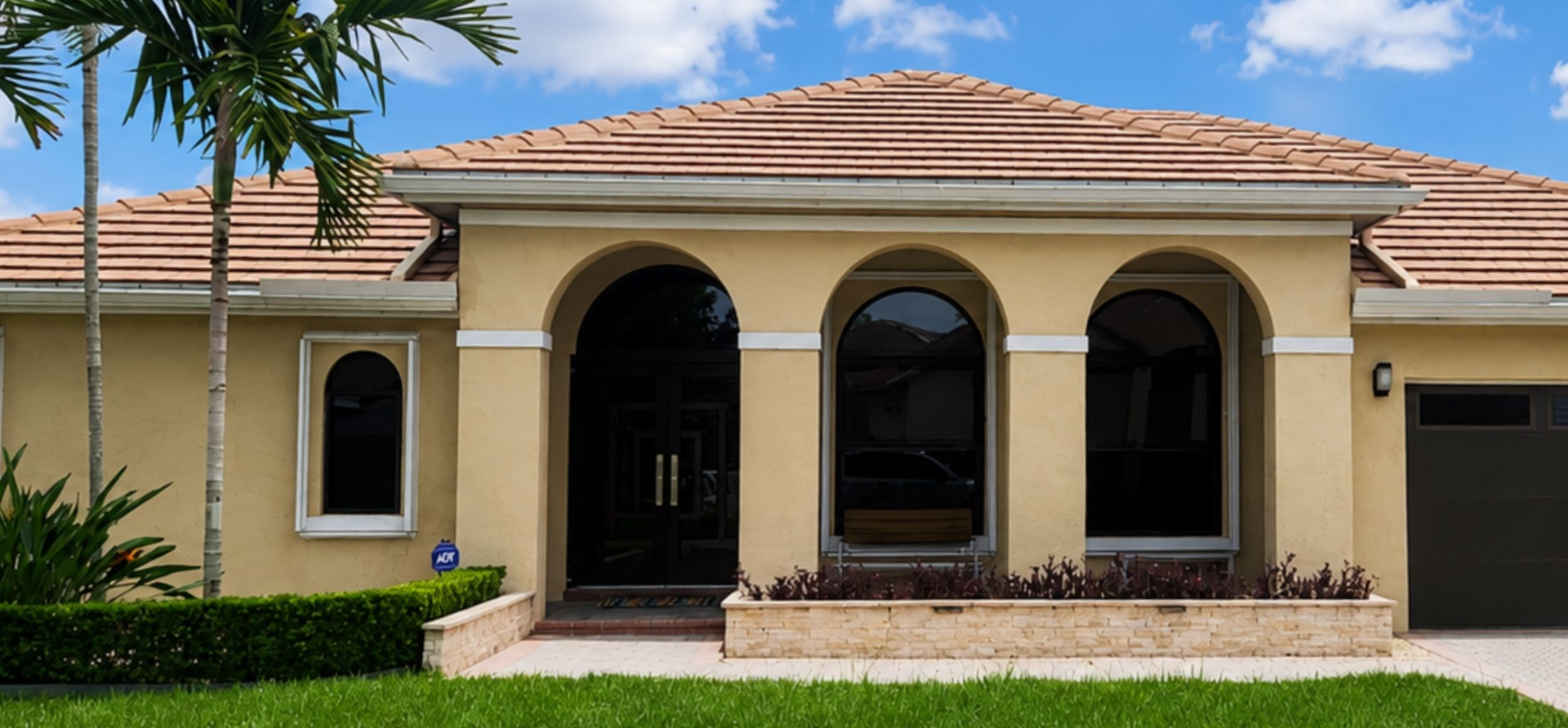
Roof Replacement in SilverLakes
SilverLakes opened in 1991. That makes it the oldest of the big Pembroke Pines communities — and the only one where the real question isn’t when your roof was built, but which roof you’re on.
Original 1990s tile, or a post-Wilma replacement from 2005–2008? They need different conversations. SafeTech Roofing and Windows is a licensed Broward County roofing contractor handling tile replacement, leak repair, inspections, and hurricane impact windows throughout SilverLakes.
About SilverLakes
The SilverLakes Community Association was established in 1990, with the first villages opening in 1991 and construction continuing through 1998. It is one of the largest master-planned communities in southwest Broward, built around a chain of lakes with parks, mature landscaping, and a mix of village styles under one set of architectural standards.
Architecturally it is Mediterranean and Spanish: stucco elevations, arched entries, and concrete tile in barrel and flat profiles. Roof geometry tends to be complex — multiple hips, valleys, and dormers — which looks excellent and gives water more places to find its way in.
What sets SilverLakes apart from the newer communities nearby is simply time. These homes have been through Irma, Wilma, and thirty summers of UV. Most have already had roof work of some kind. Knowing exactly what was done, and when, is where every honest conversation about your roof starts.
Which Roof Are You On?
Almost every SilverLakes home falls into one of three groups. Find yours before you spend a dollar — the right next step is completely different for each.
Still on the builder’s roof
Permitted under the old South Florida Building Code, with no secondary water barrier and lighter fastening than today’s standard. At 28 to 35 years, this roof is living on borrowed time regardless of how the tile looks.
Replaced in the storm rush
Wilma triggered a re-roof wave across Broward, and quality varied enormously under that demand. These roofs are now around 20 years old and deserve a hard look at underlayment, valleys, and flashing.
Built to current code
A self-adhered secondary water barrier, re-nailed deck, and current fastening. This roof is fine — but it should still be inspected annually and documented for your insurer.
Why Roofing in SilverLakes Is Different
Six things about this community change how a roof should be assessed and priced here.
Built before the 2002 Florida Building Code
Original roofs here predate the statewide code. No self-adhered water barrier, lighter fastening, and details that would not pass an inspection today.
A whole wave of roofs aging out together
The 2005–2008 post-Wilma replacements are now hitting 20 years. A second re-roof wave is already underway on these streets.
Complex hips, valleys, and dormers
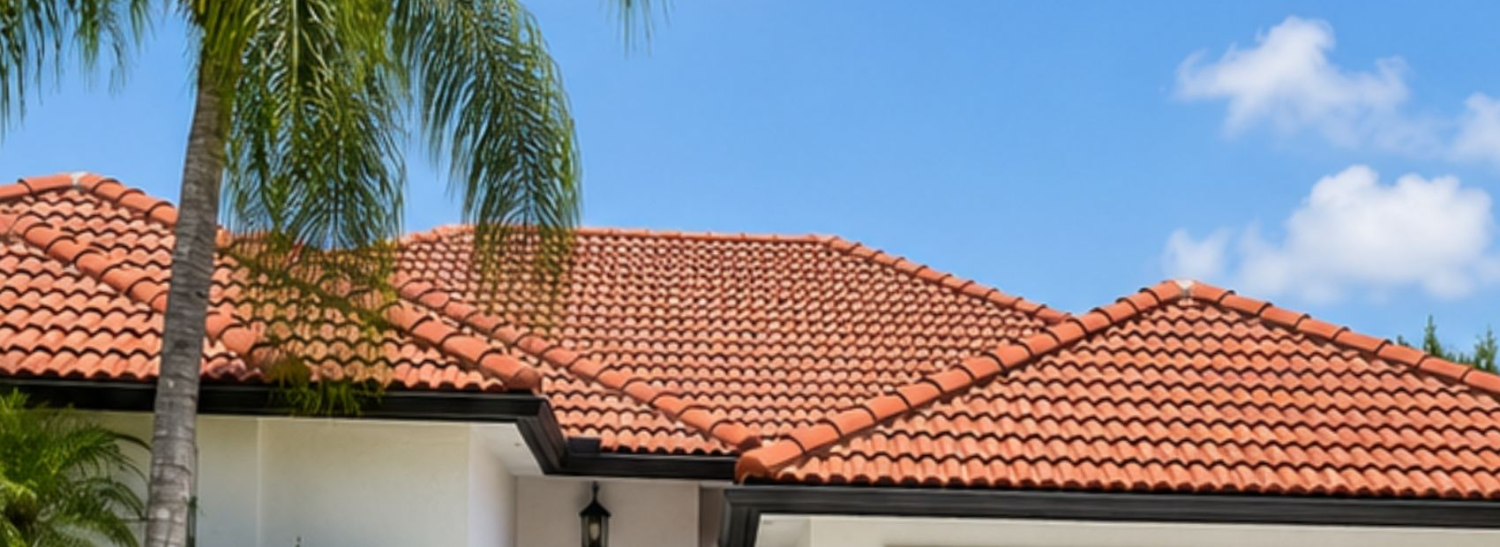
More linear feet of valley and flashing than a simple hip roof, and every one of those transitions is a potential leak. It also affects your price — honest estimates here are measured, not guessed.
The landscaping has fully matured
Trees planted in the 1990s now overhang rooflines. Constant debris in valleys, algae on shaded slopes, and branch strikes in every tropical system.
Open water through the community
Lakefront lots get wind with nothing upwind to break it, which concentrates uplift at perimeters, ridges, and rake edges.
Uniformity across many villages
Roof shape, material, and color are reviewed for consistency, and standards can differ village to village. We check yours specifically rather than assuming.
What We Actually Find on 1990s SilverLakes Roofs
An honest inspection report on a 30-year-old tile roof is rarely a surprise. These are the findings that come up again and again, roughly in order of how often we see them.
- Underlayment past its life — dry, brittle, cracking at every fastener
- Valley metal at the end — debris-packed, rusted through at the hem
- Patched-over previous repairs — mastic and sealant instead of new flashing
- Mortar loss at hips and ridges — original mud-set work, thirty years on
- Cracked and slipped tile from decades of foot traffic and storms
- Neglected flat sections over lanais that were skipped at the last re-roof
- Undocumented work — repairs with no permit record, which insurers dislike

A home’s build year is not its roof age
We pull the permit history for your SilverLakes address and inspect what is actually up there. Free, with a photo report you keep either way.
Tile Profiles & Materials for SilverLakes Homes
Matching your village’s established look is usually the fastest route through architectural review. Here is how the profiles on these streets behave in practice.
High-profile (S) barrel tile
The signature SilverLakes profile — the deep S-curve that defines the Spanish and Mediterranean elevations across most villages. Strong shadow lines, and the airflow under the curve keeps the deck cooler than any other tile. The trade-off is more open ends to close at eaves, hips, and ridges, so detailing quality matters more here than on flat profiles.
Low-profile barrel tile
A shallower curve that keeps the Mediterranean character with less exposed edge to seal. It sits well on the complex hip-and-valley geometry common in SilverLakes, and it is a common substitute when an original high-barrel product is no longer manufactured — which, on a 1990s roof, it usually is not.
Flat concrete tile
Clean, low-shadow lines that read as slate from the street, and the simplest surface to flash and seal. In practice these roofs give us the fewest callbacks at hips and valleys. Widest range of current color blends, which helps when an original blend has been discontinued.
Slate-profile concrete tile
A textured, cleft-face tile that mimics natural slate at a fraction of the weight and cost. Popular on the larger homes where a stronger texture suits the elevation. Darker blends absorb noticeably more heat, so pair them with proper attic ventilation.
Flat and low-slope areas
The lanai, bay, and entry overhangs. These are re-covered in modified bitumen or membrane, never tile, and they are the part of a SilverLakes roof most often skipped at a previous re-roof. If your leak does not match the weather, this is usually where it is coming from.
What Changed in the Code Since Your Home Was Built
SilverLakes was built under the old South Florida Building Code. The statewide Florida Building Code arrived in 2002 and Broward remains a High Velocity Hurricane Zone, so a replacement roof today is a materially different system from the one that came off. In plain English:
The biggest single change. A self-adhered membrane bonds directly to the deck under the tile, so if wind ever strips the surface the house still stays dry. Your original roof does not have this.
Sheathing is re-nailed to current uplift standards and soft plywood replaced. It is recorded on your wind mitigation form, which is one of the credits carriers pay for.
All new valley metal, wall and counter flashing, pipe boots, and drip edge. On a thirty-year-old roof there is no such thing as reusable flashing, whatever anyone tells you.
Tile is attached per its current Florida Product Approval for our wind zone, with tighter spacing at perimeters, corners, hips, and ridges — the zones that fail first on lakefront lots.
Balanced intake and exhaust cools the attic, extends roof life, and eases the load on your air conditioning. Lighter tile blends help further on west-facing slopes.
Everything is permitted through the City of Pembroke Pines and inspected at each stage. The signed permit record is what protects you at resale and at renewal.
Hurricane Impact Windows for SilverLakes Homes
1990s homes here shipped with single-pane aluminum windows and, in most cases, accordion or panel shutters. Thirty years of salt air and sun later, the frames are tired, the seals have failed, and the shutters are a chore nobody wants at 60.
Insurance credits
Windstorm mitigation credits apply when the whole home has approved opening protection. On a 1990s house with an original roof, doing both at once is the strongest position you can take with a carrier.
Comfort you feel
Laminated Low-E glass cuts solar heat gain and UV fading — which matters in rooms that have been bleaching furniture for three decades — and it noticeably quiets the outside.
Resale in an older community
Buyers looking at a 1990s home price in the roof and the windows before they price anything else. Having both done and documented removes the biggest objection on the table.
How it works: laminated glass bonds two panes to a tough interlayer. On impact it can crack but stays in the frame, so the envelope holds and wind pressure never gets inside to lift the roof. Frames are anchored per code and inspected under permit. We also install impact sliding glass doors and entry doors — and for older openings, we handle the stucco and finish work properly rather than caulking over it.
Roofing & Window Services in SilverLakes





HOA Approval & Permits — How We Handle It
SilverLakes maintains architectural standards across its villages, and requirements are not identical everywhere. We handle the sequence so you are not the one chasing it.
Inspection & permit history
Measured roof, photo report, permit record for your address, and an itemized price including a stated decking allowance.
Village standards check
We confirm the current requirements for your specific village — shape, material, and approved color range — before anything is ordered.
Submittal & city permit
Samples, product approvals, and the architectural application prepared for signature; Pembroke Pines permit pulled under our license.
Build & close-out
Landscaping and driveway protected, daily magnet sweeps, final inspection signed off, warranty and wind mitigation paperwork delivered.
Roof Maintenance Checklist for SilverLakes
SilverLakes Roofing & Impact Window FAQs
How old are most roofs in SilverLakes?
SilverLakes opened in 1991 and built out through 1998, so an original roof here is 28 to 35 years old. Many homes are already on a second roof, often installed during the 2005–2008 wave after Hurricane Wilma — which makes those roofs about 20 years old today. The build year on the county record is not your roof age; the permit history is.
Was my roof built to the current Florida Building Code?
If it is original, no. These homes were permitted under the older South Florida Building Code, before the statewide Florida Building Code took effect in 2002. A modern replacement adds a self-adhered secondary water barrier, current fastening schedules, and documented deck re-nailing — none of which your original roof has.
My roof was replaced after Hurricane Wilma. Is it still fine?
Worth a proper look. Post-Wilma roofs are now roughly 18 to 21 years old, and that period saw enormous demand and very uneven workmanship across Broward. We check the underlayment type, valley metal, and flashing quality, and pull the permit record to confirm the work was actually inspected.
What roofing materials are common in SilverLakes?
Concrete tile dominates — high barrel, low barrel, flat, and slate-look profiles across the villages. Some homes have architectural shingle, and virtually every home has a flat or low-slope section over a lanai, bay, or entry that is roofed in modified bitumen or membrane rather than tile.
Do I need HOA approval for a roof replacement?
Yes, and the requirements are not identical in every village. Roof shape, material, and colour are reviewed for consistency, and impact window projects are reviewed for frame colour and grid pattern. We confirm your specific village standards and prepare the architectural submittal for signature before anything is ordered.
How long does a roof replacement take?
A concrete tile roof typically takes 5 to 10 working days on site; a shingle roof 2 to 4. Your home is dried in and watertight within the first day or two, so you are never exposed for long. Add lead time for HOA approval and the Pembroke Pines permit before the crew arrives.
Do impact windows reduce insurance premiums?
They can. Carriers apply windstorm mitigation credits when the whole home has approved opening protection, and further credits apply to a new roof with documented deck re-nailing and a secondary water barrier. The actual saving depends on your carrier, your home, and how well the work is documented — ask your agent what your specific policy allows.
What happens if you find rotten decking during the job?
On a thirty-year-old roof we usually find some, and we tell you that up front rather than after. Your written estimate carries a stated allowance and a per-sheet price, so there is no renegotiation once the tile is off. Anything replaced is photographed and shown to the city inspector.
Our Service Area Around SilverLakes
SilverLakes runs along Sheridan Street in southwest Broward, near SilverLakes Park and SilverLakes Middle School, with Miramar to the south and the rest of west Pembroke Pines to the north. Our crews are in this corner of the county most weeks of the year.
Nearby communities we serve
Protect your SilverLakes home before the next storm
Original 1990s roof, post-Wilma replacement, or not sure? Start with an inspection and the permit record. We’ll tell you honestly whether you need a repair, a replacement, or nothing at all yet.